Most roof leaks we repair in the Valley do not come from a worn-out roof. They come from one nail that backed out, one vent boot that cracked in the sun, or one bead of sealant that dried up and pulled away. Each is a small fix on a dry afternoon and a bigger repair once water has soaked the insulation and drywall underneath.
That is the whole idea behind a tune-up: find the small failures and fix them before the rain does.
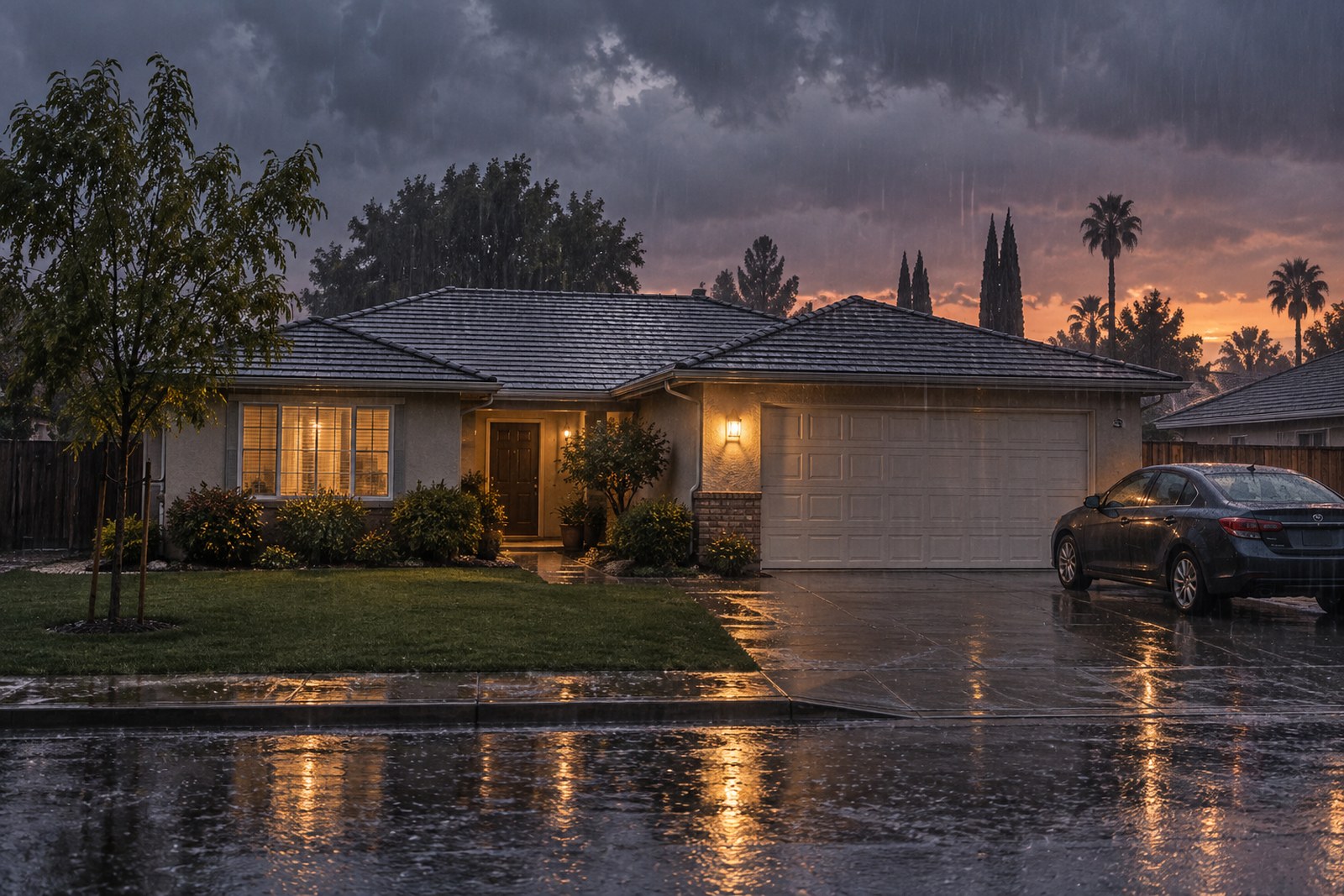
This season the timing matters more than usual. NOAA's Climate Prediction Center gives a greater than 90% chance of a very strong El Niño this fall and winter, which raises the odds of a wet season across California. Sealants and repairs need a dry roof, so the work is easiest to schedule before the first storm.
What Does a Roof Tune-Up Include?
A tune-up is a full walk of the roof with a repair kit, not just a look. On an asphalt shingle roof, ours covers:
- Popped and high nails. Nails that have backed up under or through a shingle get driven back down and sealed, or pulled and replaced.
- Exposed nail heads. Every exposed fastener gets a dab of roofing sealant so water cannot follow the shank into the deck.
- Pipe and vent flashing. We check the metal flashings and rubber boots around plumbing vents, turbine vents and exhaust caps, and reseal or replace them.
- Loose, lifted or cracked shingles. Lifted tabs are sealed back down. Broken shingles are replaced.
- Ridge caps. Cracked or missing caps are replaced, since they are usually the first part of a shingle roof to fail.
- Flashing at walls and chimneys. Old mastic that has cracked or pulled away gets cleaned and resealed.
- Photos. You get before-and-after photos of every item, so you can see what was done.
What a tune-up is not: it is not a new roof, and it will not fix a deck that is rotten or shingles that are worn out across the whole roof. If we find that during the visit, we tell you and show you the photos.

Why Do Nails Pop and Flashing Fail on Valley Roofs?
Heat is the main reason. A roof surface in a Fresno summer gets far hotter than the air, then cools off at night. The decking, the shingles and the nails all expand and contract with every one of those cycles.
Nail pops happen when a nail slowly works its way up out of the wood. The California Residential Code requires shingle nails to go at least 3/4 inch into the roof sheathing, or all the way through it if the sheathing is thinner than that. Nails that were driven short, driven at an angle, or driven into something softer than solid decking lose their grip faster. Once a nail rises, it pushes up the shingle above it, breaks the seal strip, and can wear a hole through the shingle.
Flashing fails for a different reason. Most vent and pipe flashings were sealed with mastic when the roof went on. In Valley sun that mastic dries, shrinks and cracks within a few years, even when the metal underneath is fine. Rubber pipe boots crack the same way.
Neither problem shows from the street. You find them by walking the roof.
What Did a Tune-Up Look Like on a Real Kerman Roof?
Here is an example from a home in Kerman, west of Fresno. The homeowner first had us out in August 2025. Our inspector found high nails across the roof, some sitting under the shingles and some pushed through them. The homeowner asked that every one be nailed back down. He called us back this September to move forward with a tune-up and a Roof Maxx treatment.
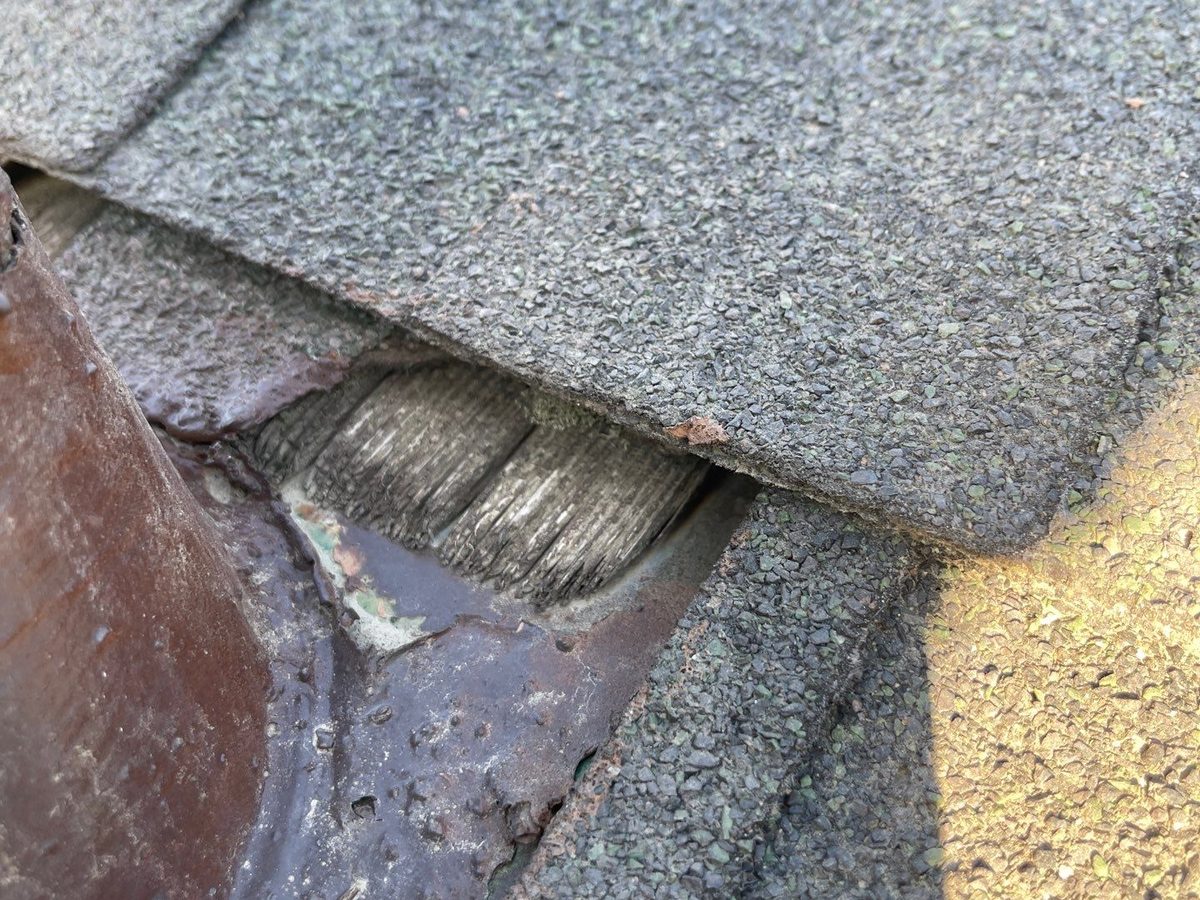
When our crew got on the roof on September 24, they found the reason the nails kept rising. Lifting a shingle near a vent pipe showed old wood shake shingles underneath the composition shingles. At some point the house had been re-roofed by laying shingles straight over the original shake roof. Nails driven through shingles into dry, uneven shake do not hold the way nails into solid decking do, and our crew noted it as another reason the shingles were sagging and lifting.
Here is what the crew did that day:
- Drove down and sealed the high nails, and sealed all exposed nail heads.
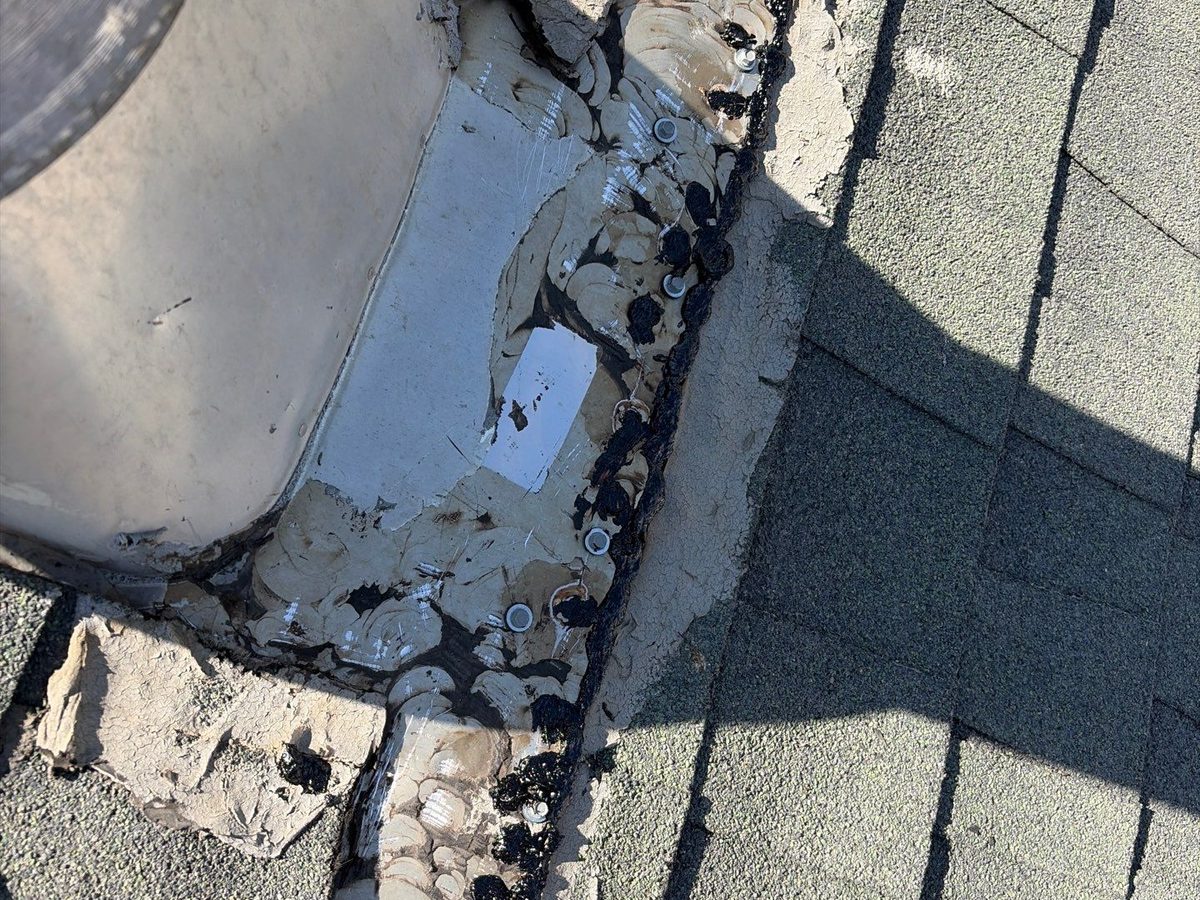
- Resealed the flashing around the turbine vents with fresh roofing cement.
- Sealed the plumbing vent flashing completely, including the top of the boot where the pipe comes through.
- Applied a Roof Maxx treatment so the shingles stay flexible and less likely to crack.
There is a lesson in this job for anyone with an older Valley home. The California Residential Code does not allow a new roof to go over a roof that already has two or more layers. Shingles over shake already count as two. When this roof does reach the end of its life, it will need a full tear-off down to the deck, not another layer. The tune-up buys time and keeps the water out until then.
How Often Should You Get a Roof Tune-Up?
For most Valley homes, these are good rules of thumb:
- Roofs under 10 years old: an inspection every couple of years is usually enough. Tune-up work is rare unless something was installed wrong.
- Roofs 10 years and older: a tune-up every two to three years, ideally in late summer or early fall before the rains.
- After a big windstorm or a hard season: a quick check, even on a newer roof.
- Before buying or selling: a tune-up with photos helps both sides know what they are getting.
Why late summer or early fall? Two reasons. Roofing cement and sealants bond best on a warm, dry surface, and the Valley's dry season gives you weeks of that. And a tune-up done in September or October covers the roof right before it takes its hardest beating of the year. Wait until after the first storm and you are usually scheduling a leak repair instead, often with a wet attic and stained drywall added to the bill.
Pair it with the homeowner side of the job. Our roof maintenance checklist covers what you can safely check yourself: gutters, ceilings, the attic and trees. The tune-up covers what needs someone on the roof.
Is a Tune-Up Enough, or Do You Need More?
That depends on what the roof looks like once someone is up there. In general:
| What we find | What usually makes sense |
|---|---|
| Popped nails, cracked sealant, a few loose shingles | A tune-up |
| The above, plus shingles that are dry and stiff but still have their granules | A tune-up plus a Roof Maxx treatment, if the roof qualifies |
| A specific leak, broken ridge caps or storm damage | Targeted roof repairs |
| Curling across whole slopes, bare spots, a soft or sagging deck | Replacement; see our re-roofing page |
The point of an inspection is to put your roof in the right row, not to sell the most expensive one. If you are in the foothills, we can also check your vents and roof edges for ember resistance as part of our wildfire home hardening work.
Before you hire anyone, check their license with the CSLB. Ours is #1126804. Then book the tune-up while the roof is dry. Our El Niño roof preparation page has the details, and crews cover Fresno, Kerman, Clovis, Madera, Visalia and the rest of the Valley, plus the Bay Area and Sacramento.
Book your roof tune-up while it is dry
We reset popped nails, reseal flashings and vent boots, and replace cracked shingles and ridge caps, with before-and-after photos of every item.
Book a free inspectionor call (559) 550-6398
Frequently asked questions
What is included in a roof tune-up?
A roof tune-up covers the small items that cause most leaks: resetting and sealing popped nails, sealing exposed nail heads, resealing or replacing flashing and boots around vents and pipes, sealing lifted shingles, replacing cracked shingles or ridge caps, and resealing wall and chimney flashing. You should get photos of each item.
How long does a roof tune-up take?
Most tune-ups on a single-story home take part of a day. Larger roofs, steep roofs, or roofs with a lot of nail pops and flashings can take a full day. Adding a Roof Maxx treatment usually fits into the same visit when the roof qualifies.
What causes nail pops on a roof?
Nail pops happen when a nail slowly backs out of the wood as the roof heats and cools. Nails that were driven too short, at an angle, or into old shake or soft wood instead of solid decking are the most likely to rise. A popped nail can break the shingle seal and let water in.
Can you do a roof tune-up when it is raining?
Not well. Sealants and roofing cement need a clean, dry surface to bond, and a wet roof is unsafe to walk. That is why tune-ups are best done in late summer or early fall, before the rainy season, or during a dry stretch between storms.
Does a tune-up work on tile roofs?
Yes, but it looks different. On tile, a tune-up focuses on cracked or slipped tiles, ridge and hip mortar or fasteners, flashing at walls and valleys, and pipe flashings. If the underlayment under the tile has failed, a tune-up will not fix that; the tile has to be lifted and the underlayment replaced.
Job details describe work our crew performed and photographed in Kerman, California, in September 2026. Every roof is different; recommendations depend on inspection.