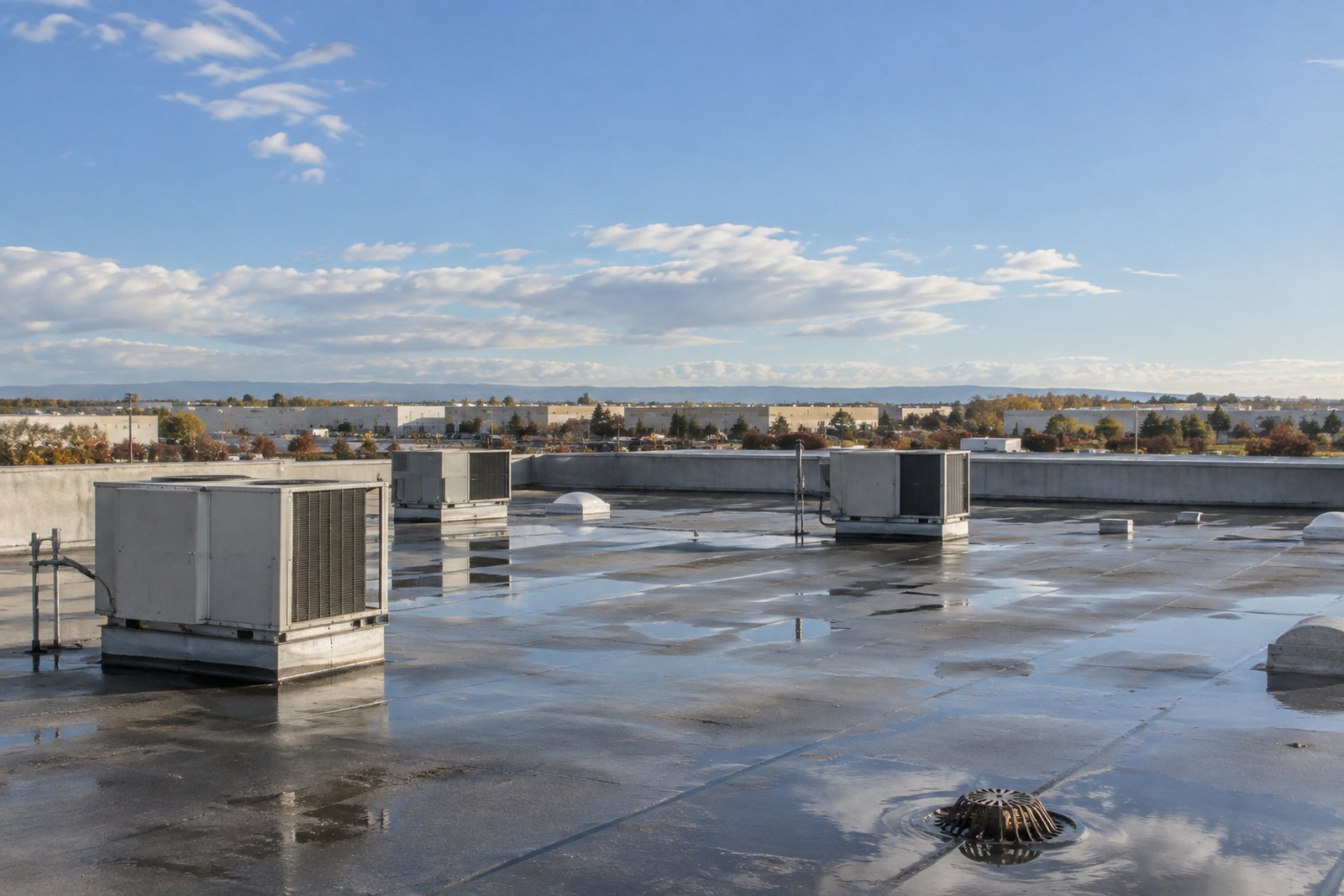
Most roof leaks don't start with a storm. They start months earlier with a clogged gutter, a cracked vent boot or a slipped tile that nobody noticed while the weather was dry. The first heavy rain just finds them.
This year the timing matters more than usual. NOAA forecasts a greater than 90% chance of a very strong El Niño this fall and winter, which raises the odds of a wet season across California. Most of the Central Valley's rain falls between November and March, so the weeks before that are when roof work is easiest to schedule and quickest to finish.
Below is the checklist we use ourselves, split into what you can safely do and what is better left to a roofer.
Why Should You Do Roof Maintenance Before the Rain, Not After?
Because almost every fix a roof needs works best on a dry surface.
Sealants and flashing cement need a clean, dry surface to bond. Shingles and underlayment should not go over damp decking, because trapped moisture leads to rot and mold. Treatments and coatings, including a Roof Maxx treatment, have to be applied to a dry roof. Once storms start arriving every week or two, a lot of that work waits for a dry window, and the dry windows get short.
There is also a cost reason. A cracked vent boot found in October is a small repair. The same boot found in January, after water has soaked the insulation and stained the drywall, is a bigger job inside and out.
Think of pre-season maintenance as moving the leak off your calendar. You deal with it on a sunny afternoon instead of during a storm.
What Can You Check on Your Roof From the Ground?
More than most homeowners expect. You don't need to climb up. Stand across the street, then walk around the house. A pair of binoculars helps.
Work through this part of the roof maintenance checklist slope by slope:
- Shingles: look for curled edges, cracked tabs, bald spots where the granules are gone, and any missing pieces after the last wind.
- Tile: look for cracked, slipped or missing tiles, especially along the edges and ridge. One broken tile can let water reach the underlayment below.
- Flashing: check the metal around chimneys, walls, skylights and vents for rust, gaps or pieces lifting away.
- Vents and pipes: the rubber boots around plumbing vents crack in the Valley sun and are one of the most common leak sources we find.
- Valleys: where two slopes meet, look for debris piles or dark streaks. Water concentrates there, so small problems grow fast.
- Ridge and roofline: a sagging or wavy line can mean wet or weakened decking and should be looked at soon.
Take photos as you go, with dates. They help a roofer see what you saw, and if a storm ever does damage the roof, a dated before photo shows what condition it was in.
| Item | What to look for | When to call a roofer |
|---|---|---|
| Gutters and downspouts | Leaves, granules, sagging sections, water spilling over | Gutters pulling away from the fascia |
| Shingles or tile | Curling, cracks, bald spots, slipped or missing pieces | More than a few damaged pieces, or any on a steep slope |
| Flashing and vent boots | Rust, gaps, cracked rubber, lifted edges | Any visible gap around a chimney, wall or pipe |
| Attic and ceilings | Water stains, damp insulation, daylight, musty smell | Any stain that grows or any daylight through the deck |
| Trees | Branches touching or hanging over the roof | Large limbs over the house |
What Should You Check Inside the Attic and Ceilings?
The inside of the house often shows a roof problem before the outside does.
Walk every room and look up. Pay extra attention to ceilings near exterior walls, under valleys, and around bathroom and kitchen vents. Brown rings, yellow stains or bubbling paint mean water has already reached the drywall. A stain that grows after rain is an active leak. One that never changes may be old, but it still tells you where to look.
If you have attic access, go up on a sunny day with a good flashlight and step only on the framing. Check for:
- Pinholes of daylight coming through the roof deck
- Dark water marks on rafters or decking, especially around pipes and vents
- Damp, compressed or discolored insulation
- A musty smell, which can point to slow moisture over time
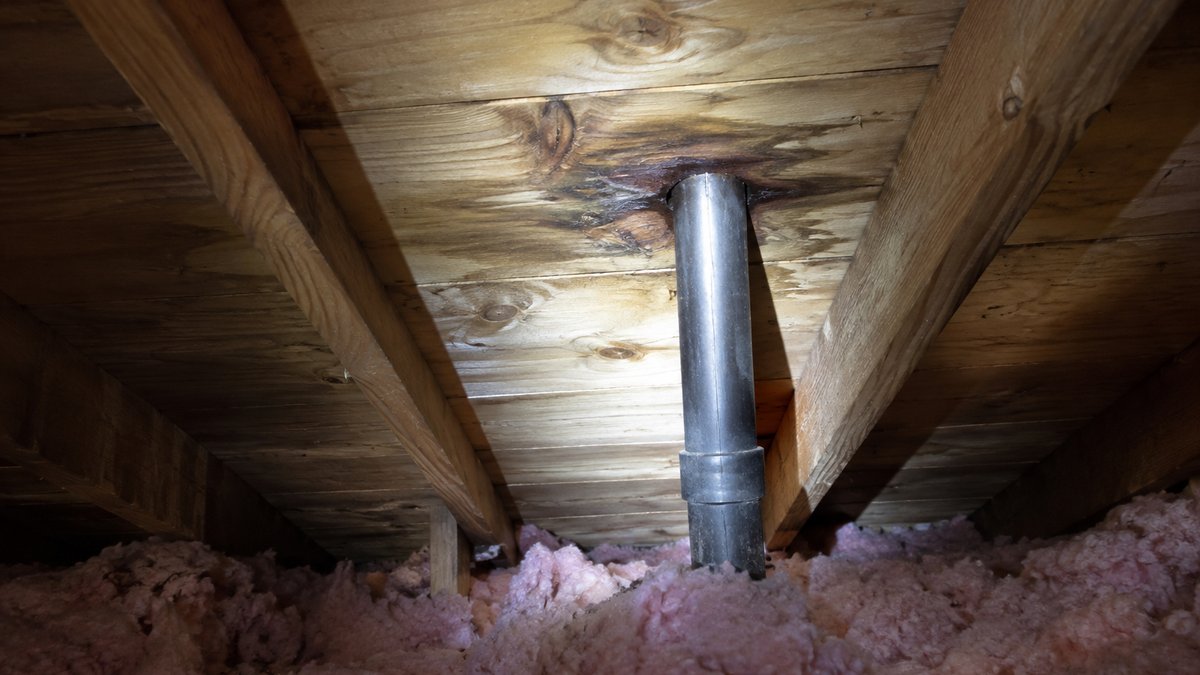
While you are up there, notice the heat. An attic that runs extremely hot in summer usually means poor ventilation, which cooks shingles from underneath and shortens their life. It is worth mentioning to your roofer.
If anything you find looks active, don't wait for the storm to confirm it. Our guide on signs you need a new roof explains what each warning sign usually means.
How Do You Get Gutters, Drains and Trees Ready for Storm Season?
Gutters are the part of the roof system most people can maintain themselves, and they matter more than they look.
When gutters clog, water backs up under the roof edge, soaks the fascia and can run behind the siding or into the eaves. Downspouts that dump water next to the house can push moisture toward the foundation. In the Valley, gutters also collect a surprising amount of shingle granules, which is a clue about how the roof itself is aging.
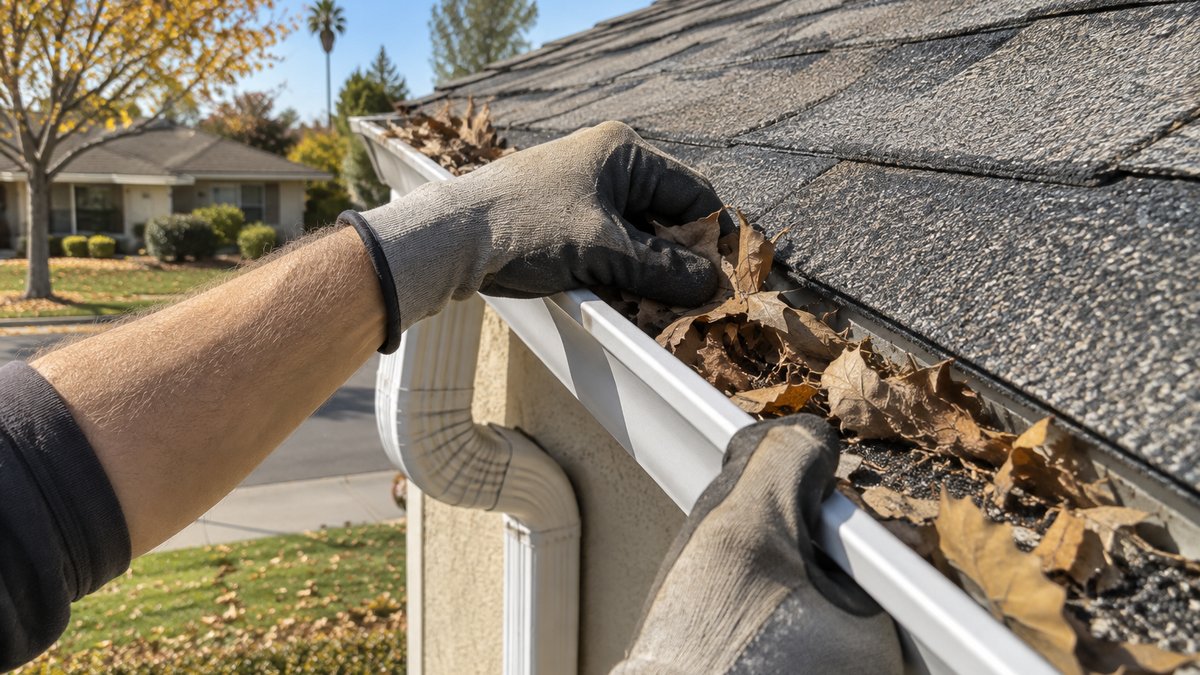
Before the first storm:
- Clear every gutter of leaves, needles and granules, then run a hose through it to confirm water flows to the downspout.
- Flush the downspouts. If water backs up, there is a clog lower down.
- Point downspouts away from the house with an extension or splash block so water drains away from the foundation.
- Tighten loose hangers and look for sections sagging or pulling away from the fascia.
- Trim branches that touch or hang over the roof. They scrape shingles, drop debris into the valleys and can come down in high wind.
Use a sturdy ladder on level ground, and have someone hold it. If your house is two stories, or the gutters sit above a steep slope or a tile roof, this is a good job to hand off. Our gutter services page covers what we do.
What Should a Professional Roof Check Include Before Winter?
Some items on the checklist aren't safe or practical to do from a ladder, and that is where a roofer earns their visit.
Don't walk a tile roof. Concrete and clay tiles crack under a misplaced step, and a broken tile is exactly the kind of damage you are trying to prevent. Steep shingle roofs are a fall risk. A roofer knows where to step and carries the right gear.
A proper pre-season roof check should cover:
- Flashing at chimneys, walls, skylights and valleys, resealed where needed
- Every pipe and vent boot, with cracked boots replaced
- Loose, cracked or missing shingles and tiles, repaired or replaced
- The underlayment, where it can be seen, since it is what actually keeps water out under tile
- Drainage from the roof to the ground, including gutters and downspouts
- Photos of everything, with a plain list of what needs attention now, what can wait and what is fine
It is also the right time to decide on anything bigger. If your shingles are drying out but not failing, a Roof Maxx treatment restores flexibility to dried-out shingles, and it has to go on before the rain. We are a 5-Star Certified Roof Maxx dealer, and we will tell you if your roof is past the point where a treatment makes sense.
Our inspection is free, and you can book it on our El Niño roof preparation page. Homeowners in the south Valley can also see our roofing in Visalia page. If a leak shows up before you get to any of this, here is what to do in the first hour of a roof leak.
Get the roofer's half of the checklist done free
We check flashing, vent boots, tile and shingles, underlayment and drainage while the roof is dry, then give you photos and a plain list of what needs attention now, what can wait and what is fine.
Book a free inspectionor call (559) 550-6398
Frequently asked questions
How often should a roof be inspected?
At least once a year, and again after any major wind or hail storm. In the Central Valley, early fall is the best time for the yearly check, because any repair has time to seal before the rain. Older roofs and tile roofs benefit from a closer look, since the underlayment under tile can wear out while the tile still looks fine.
When is the best time to do roof maintenance in the Central Valley?
September through early November. Most of the Valley's rain falls between November and March, and roof repairs, sealants and treatments all need a dry surface. Booking early also matters. Once the first storm hits, roofers get busy with active leaks, and scheduled maintenance can wait until the next dry window.
Is it safe to do roof maintenance myself?
Much of it, yes, as long as you stay on the ground or a ladder. Clearing single-story gutters, checking the roof with binoculars and looking in the attic are all safe homeowner tasks. Walking the roof is not. Tile cracks underfoot and steep shingle roofs are a real fall risk, so leave the rooftop work to a roofer.
Does regular roof maintenance matter if I ever file an insurance claim?
It can. Insurers often deny claims when they attribute damage to age, wear or poor maintenance. Dated photos and a written inspection report show the roof's condition before a storm. Coverage is always your carrier's decision, not ours. We document what we find with photos and a written report so the decision rests on evidence.
Do flat roofs need a different maintenance checklist?
Yes. On a flat or low-slope roof, the key items are drains and scuppers, standing water after rain, open seams, and the flashing around rooftop units and penetrations. Clear the drains before the rainy season, since a blocked drain is behind many flat-roof leaks. Our guide to commercial flat roof leak repair goes deeper.
Infinite Roofing Solutions is a licensed California roofing contractor (CSLB #1126804) and a 5-Star Certified Roof Maxx dealer serving Fresno, Clovis, Madera, Visalia, the Central Valley and the Bay Area. Forecast figure from NOAA's Climate Prediction Center ENSO discussion, September 2026. Book a free roof inspection at (559) 550-6398.