"How much does a roof inspection cost?" is usually the first question people ask, and it's the wrong one to stop at. A free inspection that's just a quick look from the driveway is worth less than nothing, because it tells you your roof is fine when it might not be. A careful inspection with photos of every problem is worth a lot more than you paid for it, whatever you paid.
So this guide covers both questions: what you'll pay, and what you should get for it.
The timing matters this year. NOAA's Climate Prediction Center says a strong-to-very strong El Niño is likely through early 2027, with a greater than 83% chance. That raises the odds of a wet winter in California. Repairs and sealants need a dry roof, so the time to find problems is before the first storm.
How Much Does a Roof Inspection Cost, and Why Is Ours Free?
Our residential inspections are free, and you don't have to buy anything afterward. The inspection takes about 30 to 45 minutes on the roof, plus time to go over the findings with you. You can read the details on our free roof inspection page.
Why don't we charge? Because an inspection is how we find out whether your roof needs a small repair, a Roof Maxx treatment, or a replacement, and we'd rather you see the evidence and decide for yourself.
Some roofers do charge for an inspection. That's more common when you need a formal roof certification letter for a home sale, a detailed report for a lender, or specialty testing for a leak that's hard to trace. If someone quotes you a fee, it's fair to ask:
- What do I get in writing? A report with photos, or just a verbal opinion?
- Will you get on the roof? A drone or a ladder at the gutter can't check flashing seals or nail pops.
- Do you check the attic if it's accessible?
- Is the fee credited toward the work if I hire you?
What Should a Roof Inspection Include?
A real inspection means someone walks the roof. On a shingle roof in the Central Valley, ours covers:
- The shingles across every slope. Granule loss, cracking, curling, lifted tabs, and whether the shingles still bend instead of snapping. That flexibility check decides whether a roof qualifies for Roof Maxx.
- Exposed nails and screws. Every exposed fastener is a path for water into the deck.
- Flashings and penetrations. The metal and rubber around plumbing vents, flues, turbine vents and skylights. The California Residential Code requires flashing at roof openings, wall intersections and changes in roof slope, and that's where most of the leaks we repair start.
- Rooftop equipment. Rooftop AC units, heat pumps, solar racking and satellite mounts, plus the roof around them.
- Ridge caps and valleys. Ridge caps usually fail first on a shingle roof. Valleys carry the most water.
- Gutters and roof edges. Clogged gutters push water back under the edge.
- The attic, when we can get to it. Stains, daylight, and damp insulation.
You should also get photos of every problem and a clear recommendation. If an inspector can't show you what they're talking about, get a second opinion.
What Did a Free Inspection Find on a Real Fresno Roof?
On September 29, 2026, our inspector went out to a single-story home in north Fresno. The homeowners had found a leak in the garage. Another contractor had already looked at the roof and told them to replace it soon, so they asked us for a replacement estimate.
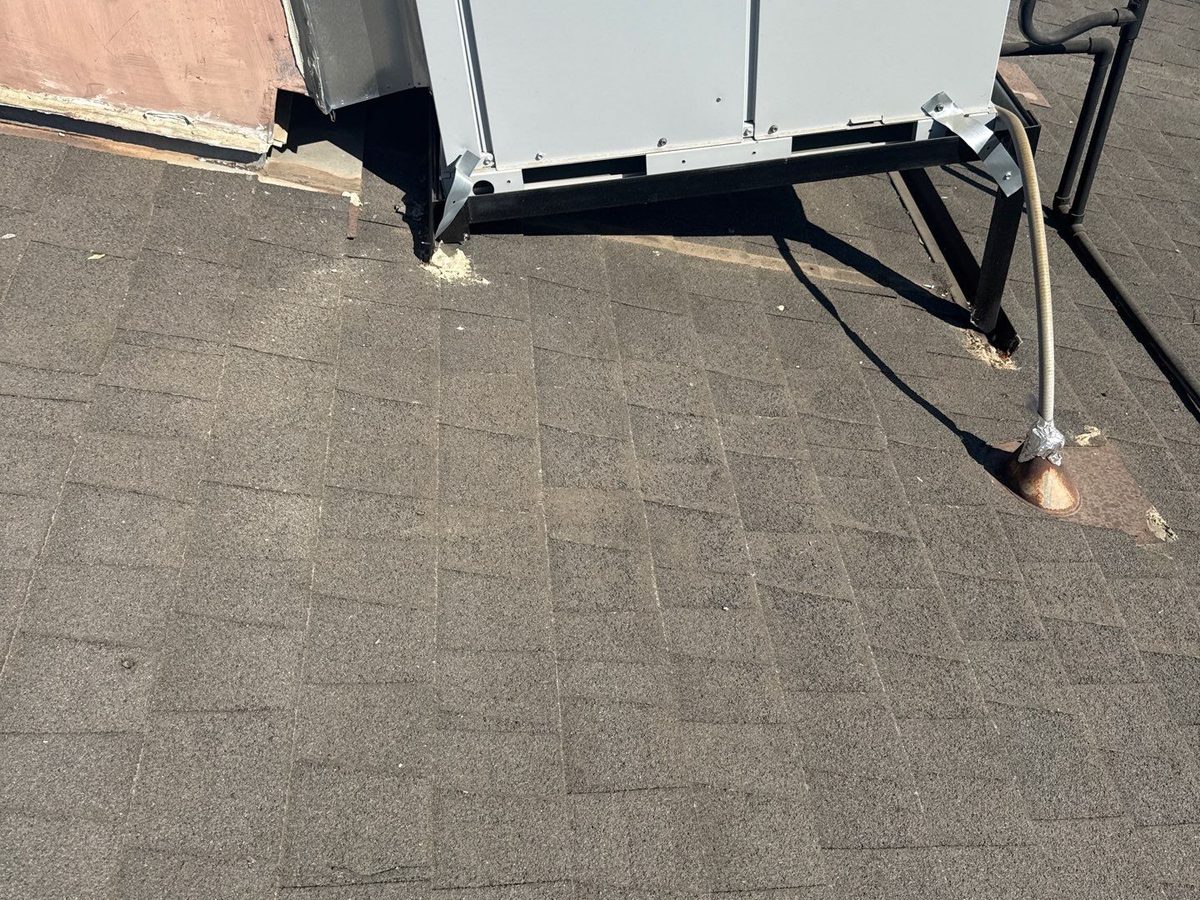
The roof had a rooftop heat pump and solar panels. Once our inspector was up there, he took photos of everything and noted what he found:
- Granule loss around the AC unit. The shingles around the heat pump were worn down, which is common where HVAC technicians kneel and walk to service equipment. Shingles that lose their granules lose their UV protection and age faster.
- Exposed nails and screws in the field of the roof, each one a spot where water can follow the fastener into the decking.
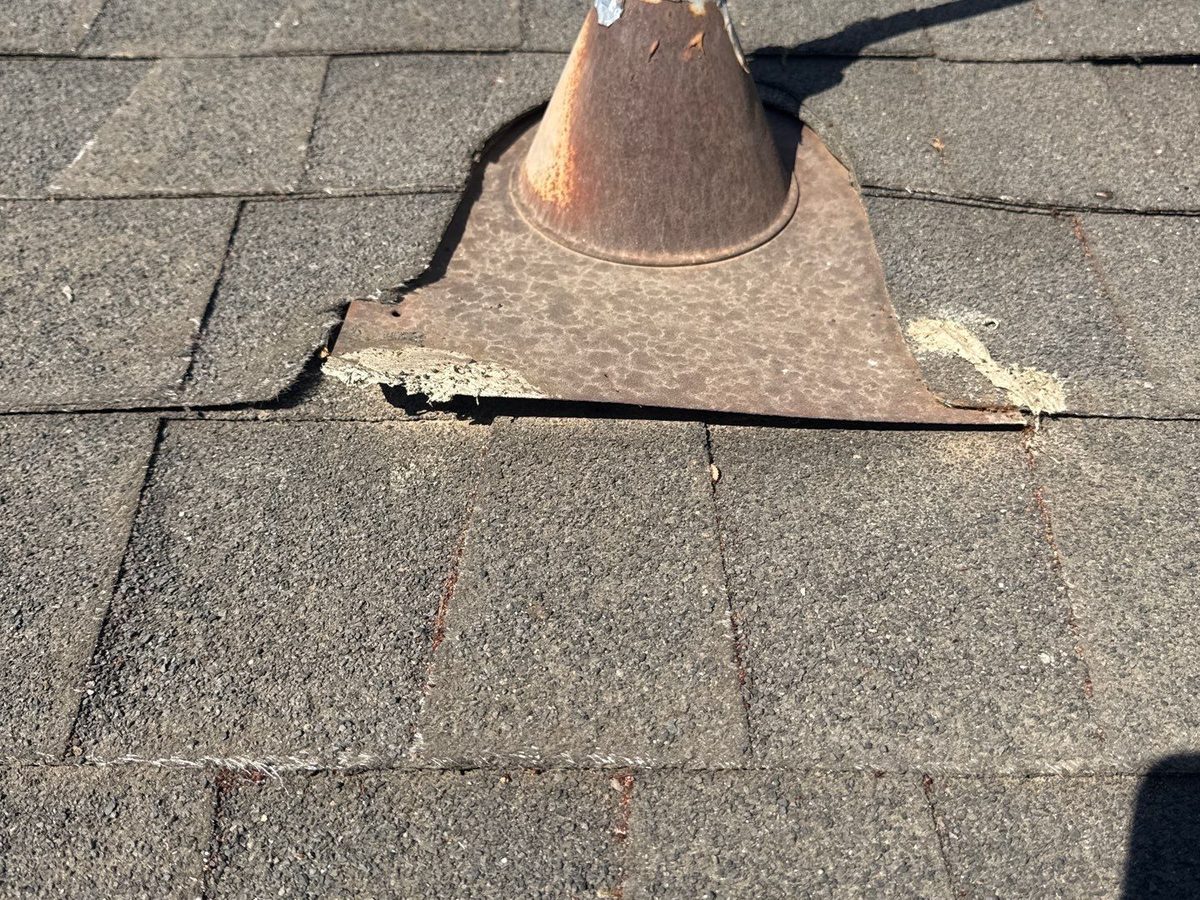
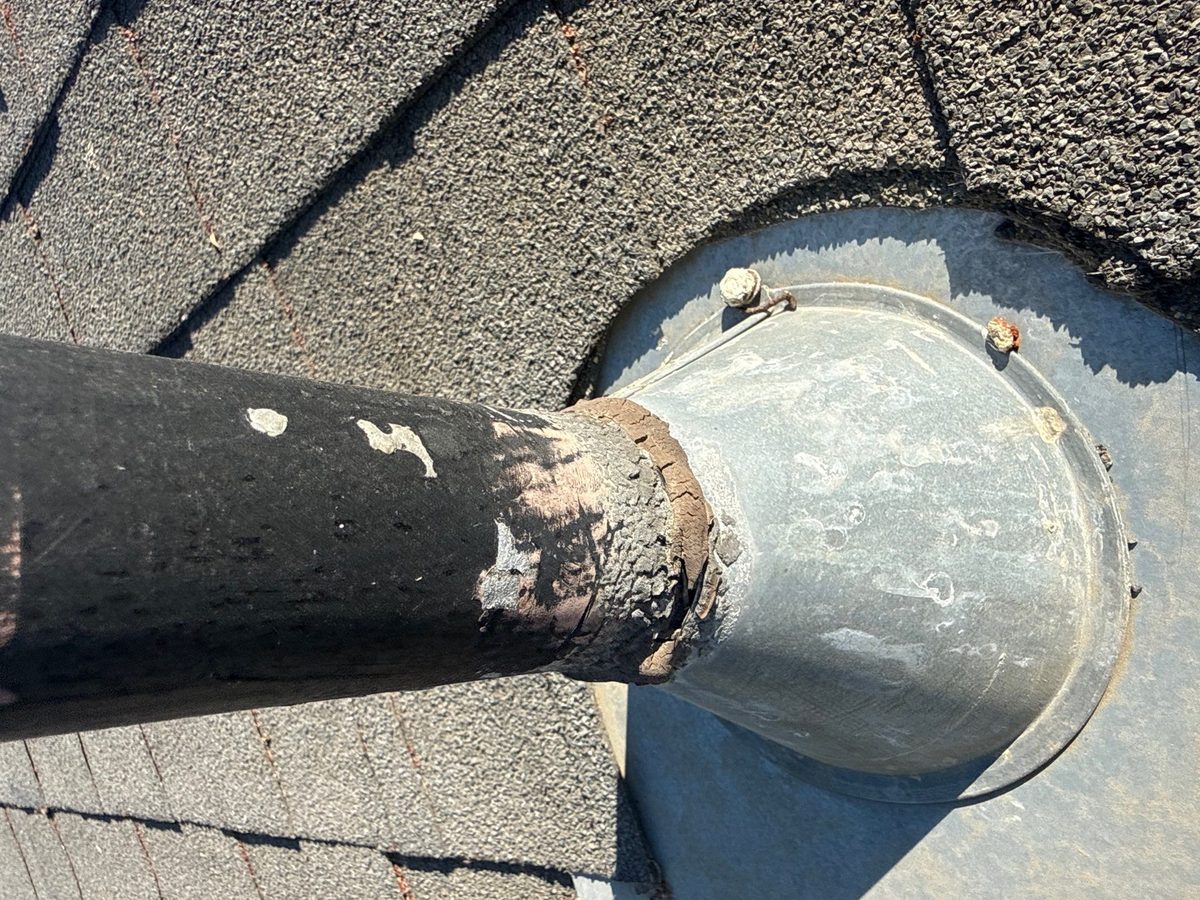
- A rusted, loose metal flashing around a pipe penetration, with the seal pulling away from the shingles.
- Cracked sealant at the collar of a flue pipe, the kind of small gap that lets water run down the outside of the pipe.
- Ridge caps that needed replacing.
The overall finding mattered most. The shingles were worn in spots, but they still had enough life and flexibility to qualify for Roof Maxx. So the homeowners didn't have just one option. They had two: a full replacement, or targeted repairs plus a Roof Maxx treatment. They wanted to see both, so we wrote both quotes and let them compare.
That's what a good inspection is for. It replaces "your roof is old" with a list of specific problems and photos you can check yourself, so you can decide whether you need a new roof or a repair.
Is a Free Roof Inspection Worth It, or Is It Just a Sales Pitch?
That's a fair question. Free inspections are how roofing companies meet customers, so some are sales visits dressed up as inspections. Here's how to tell the difference:
- A good inspector gets on the roof. Ask whether they will. A quote from the driveway is a guess.
- You get photos. Every problem they list should have a photo you can look at.
- You hear about more than one option. A roof that only ever "needs replacing" is a red flag, and so is a roof that only ever "needs a coating." The Fresno roof above got two quotes because two options were honest.
- Nobody rushes you. You should get the findings and the quote in writing and have time to think them over.
- The license checks out. Look up any contractor on the CSLB license check before they get on your roof. Ours is CSLB #1126804.
If your roof is in good shape, you should hear that too, along with the photos to prove it.
When Should You Get a Roof Inspection in the Central Valley?
Good times to book one:
- Before the rainy season. Late summer through fall is ideal. Sealants bond on a warm, dry roof, and anything we find can be fixed before the first storm. Our El Niño roof preparation page explains the timing for this winter.
- When your roof hits 10 years old, and every couple of years after that. Our guide to how long a roof lasts in the Central Valley breaks down lifespans by material.
- After anyone works on your roof. HVAC service, solar installs and satellite dishes all mean foot traffic and new holes. The Fresno roof above shows why.
- After a windstorm, or if you see shingles in the yard.
- Before you buy or sell a home.
- When you see a stain on a ceiling. Don't wait for the next storm to see whether it spreads.
Between inspections, our roof maintenance checklist covers what you can safely check from the ground and the attic. If the inspection turns up popped nails and dried-out flashings, a roof tune-up usually takes care of them in one visit. Homes in the foothills can also have vents and roof edges checked for ember resistance as part of our wildfire home hardening work.
We inspect roofs across the Valley, from Fresno, Clovis, Madera and Visalia to Bakersfield and Modesto, plus Sacramento and the Bay Area, 7am to 7pm, 7 days a week.
Book your free roof inspection before the rain
We walk the roof, photograph every problem we find, and give you a written recommendation, with no obligation.
Book a free inspectionor call (559) 550-6398
Frequently asked questions
How much does a roof inspection cost?
At Infinite Roofing Solutions, a residential roof inspection is free, with no obligation to buy anything. Some roofers charge, especially for formal roof certification letters for home sales or specialty leak testing. Whatever the price, make sure the inspector gets on the roof and gives you photos and a written recommendation.
How long does a roof inspection take?
Our inspections take about 30 to 45 minutes on the roof, plus 10 to 15 minutes to go over the findings and photos with you. Plan on about an hour. Larger roofs, steep roofs, or roofs with solar panels and rooftop equipment can take longer.
What does a roofer look for during an inspection?
A roofer checks the shingles on every slope for granule loss, cracking and curling, plus exposed nails, flashing around vents and pipes, ridge caps, valleys, rooftop equipment, gutters and roof edges. When the attic is accessible, they also look for stains, daylight and damp insulation underneath.
Do I need to be home for a roof inspection?
It helps, so the inspector can walk you through the photos in person. If you can't be home, we can inspect the exterior, and the attic if it's accessible, and call you afterward to go over what we found. Let us know about gates, dogs or locked side yards ahead of time.
Can a roof be inspected when it's raining?
Not safely. A wet roof is slippery, and wet shingles and flashings are hard to judge. We inspect during dry weather, ideally before the rainy season. During a storm, the best thing to do is catch the water inside and book the inspection for the next dry day.
Inspection details describe a roof our inspector walked and photographed in Fresno, California, on September 29, 2026. Every roof is different; recommendations depend on inspection.