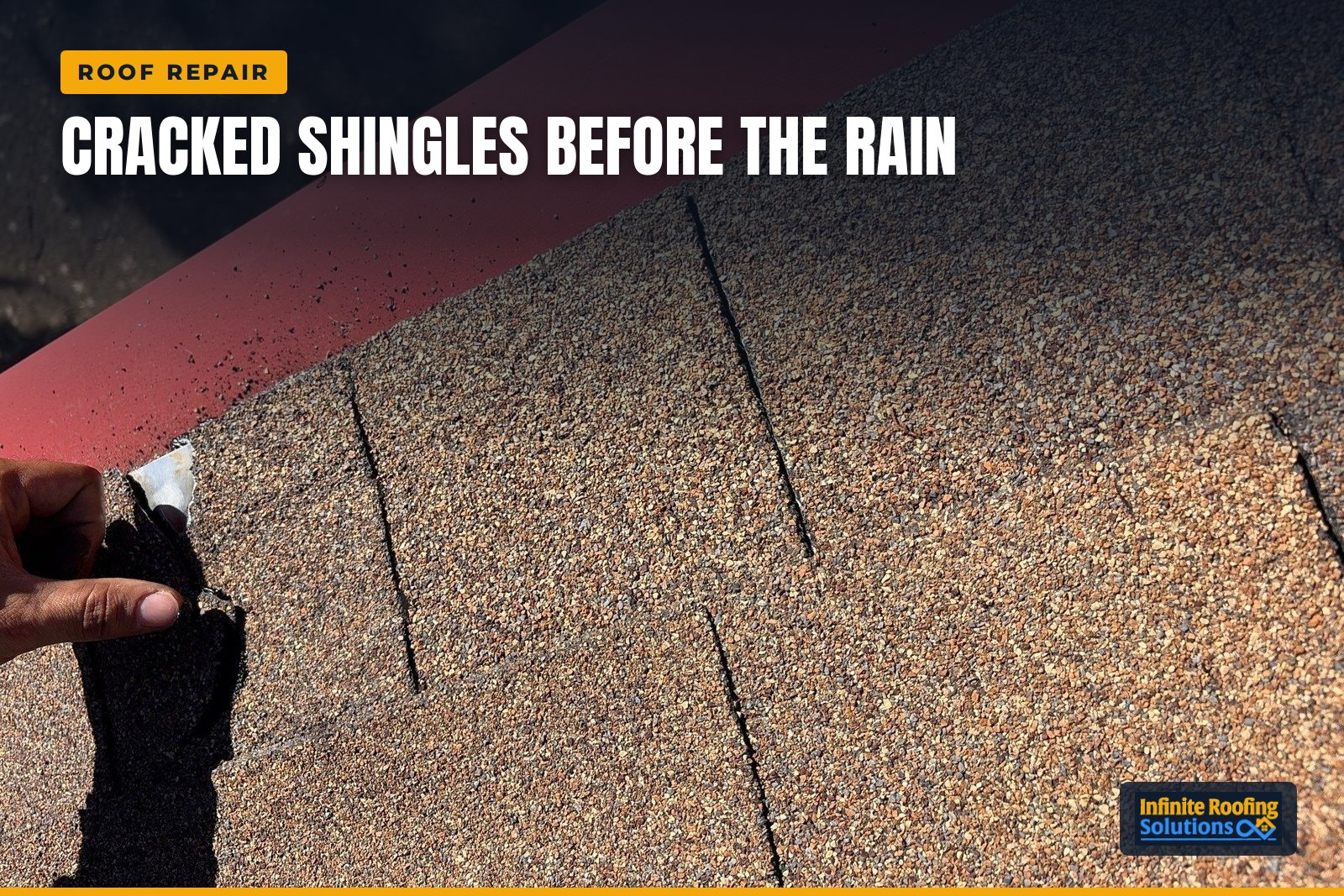
A cracked shingle doesn't always mean a leak is coming tomorrow, but it does mean the shingle has reached a point where it can no longer flex the way it should. On a recent inspection in Pittsburg, California, our crew found several cracked asphalt shingles along the roof edges and near the ridge, some of them already patched with black roofing sealant from an earlier repair. That combination, old patches sitting next to fresh cracks, is exactly the pattern that tells a roofer whether a crack is a one-off problem or a sign the whole slope needs attention.
This guide walks through why shingles crack in the first place, why a tube of roofing cement rarely solves the underlying problem, and how to tell whether your roof needs a spot repair, a Roof Maxx rejuvenation, or a full reroof before the next storm. If your roof hasn't had a roof tune-up before the rain this season, cracked shingles are one of the first things that inspection should catch.
Why do asphalt shingles crack in the first place?
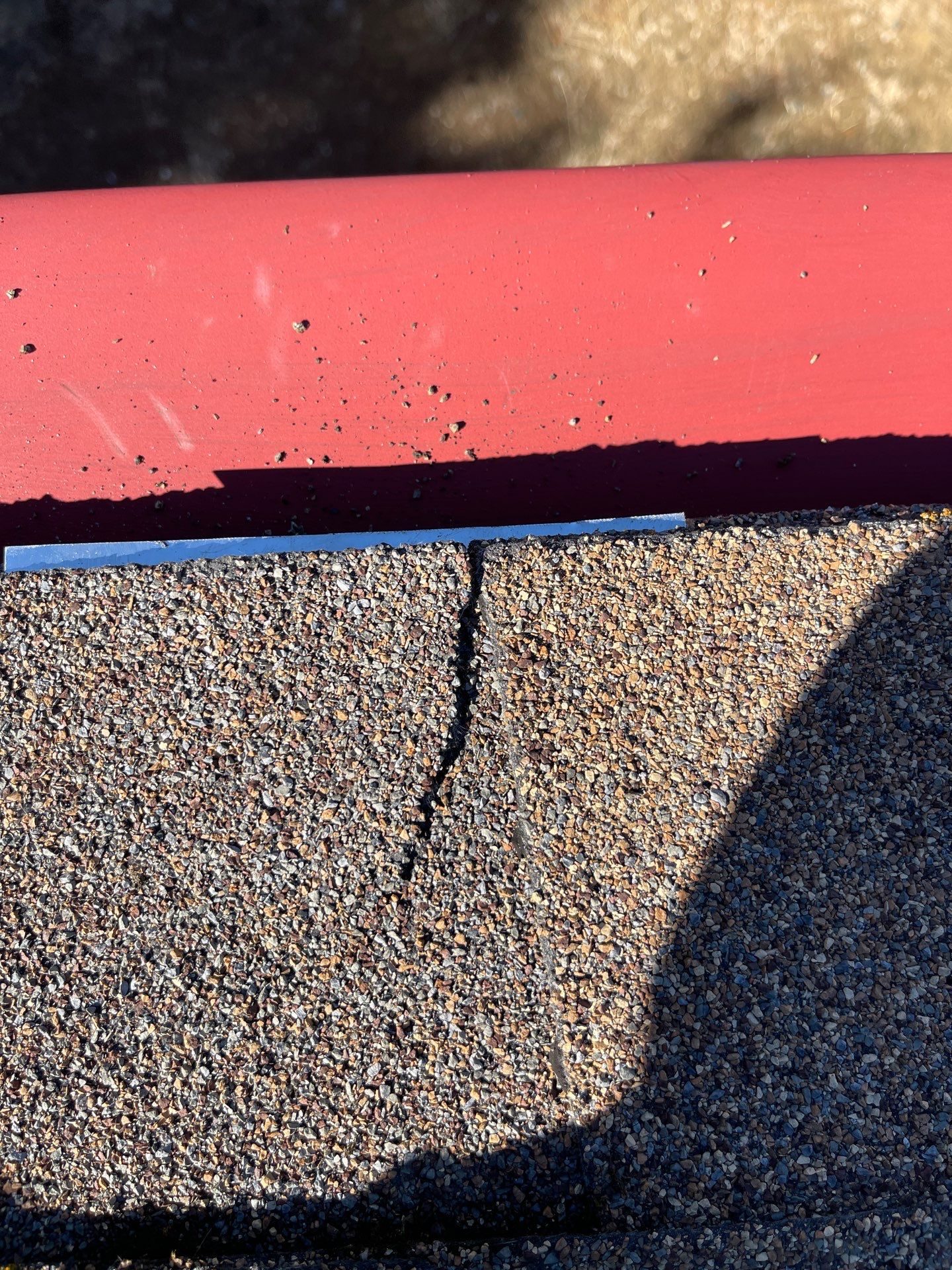
Shingles crack when the asphalt layer loses flexibility faster than it loses structural support, usually from UV exposure, heat cycling, and age working together. Granule loss is almost always part of the story: the ceramic granules on a shingle's surface block ultraviolet light from reaching the asphalt mat underneath, and once enough of them wear away, the exposed asphalt dries out and becomes brittle. InterNACHI's inspection training materials note that random surface cracking, called "craze-cracking," can expose more asphalt to UV radiation, which accelerates the same damage it's caused by. On the Pittsburg roof, the cracked shingles we found were concentrated near the ridge cap and roof edges, areas that take the most direct sun and the most repeated flexing from thermal movement.
Heat cycling plays a bigger role than most homeowners expect. A shingle can reach well over 150°F on a hot afternoon and then cool rapidly when a storm rolls through, and that expansion-and-contraction cycle happens dozens of times a year on a Central Valley or Bay Area roof. Each cycle stresses the bond between the granules and the asphalt a little more, and the cracking we saw on this job runs along those same stress lines, through the tab corners and near the metal edge flashing, not scattered randomly.
Does a roofing cement patch actually fix a cracked shingle?
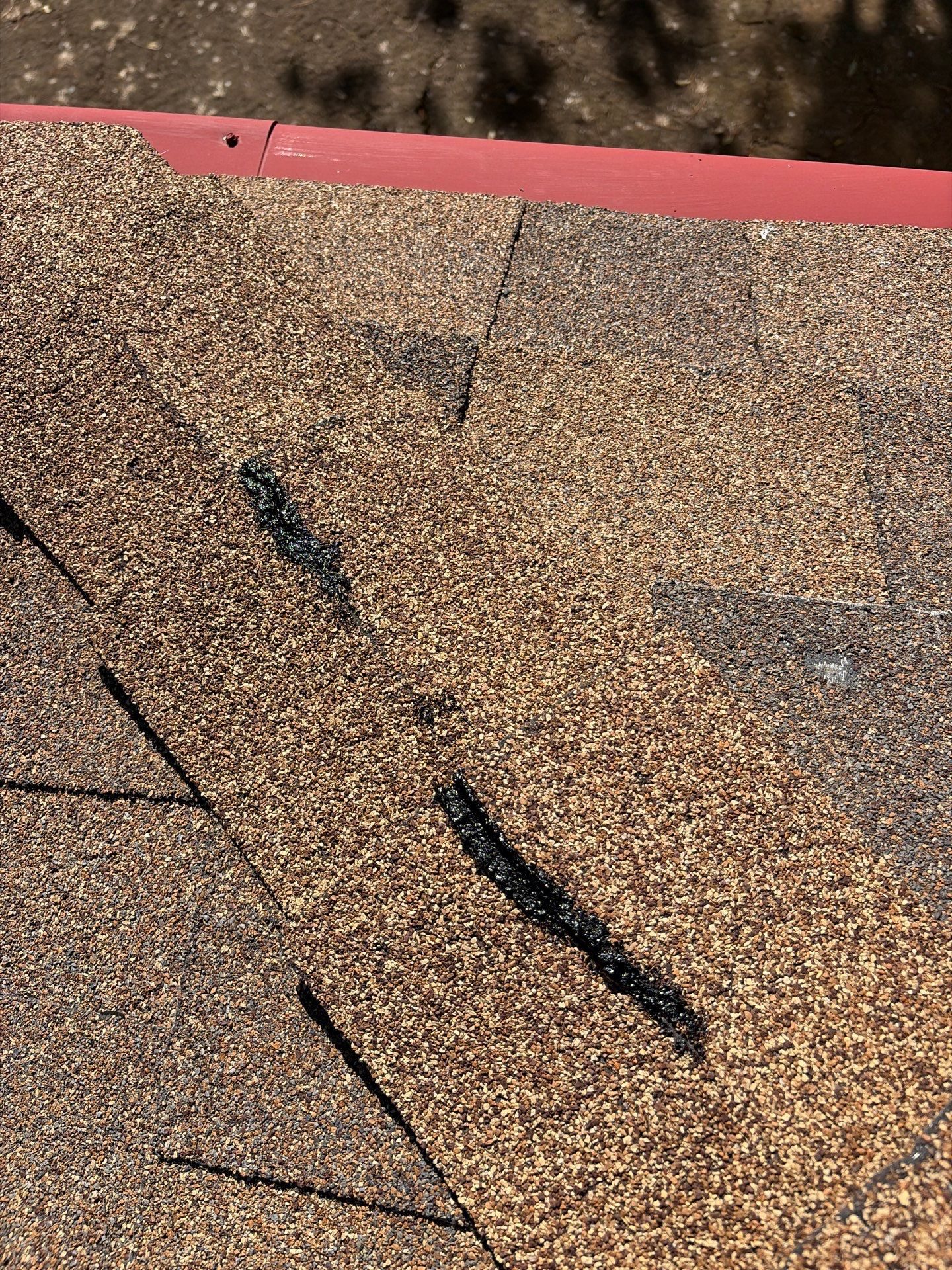
A roofing cement or mastic patch seals the crack against water for a while, but it does not restore the shingle's flexibility or stop the aging process underneath. On the Pittsburg job, several of the cracked shingles already had black sealant patches from a prior repair, and new cracks had opened up right next to the old ones. That's the pattern we see most often with cement patches: they buy time on one isolated crack, but the shingle keeps drying out underneath the patch, and the patch material itself hardens and cracks in the sun just like the shingle did.
Patches make the most sense as a stopgap on a single, isolated crack on an otherwise young roof, ideally scheduled right before a repair crew can get out for a free roof inspection and a permanent fix. They make the least sense when cracking shows up in multiple spots across a slope, because that pattern means the shingle layer as a whole is aging out, and patching one crack at a time won't keep pace with the next one forming nearby.
What does code require for shingle flashing and penetrations?
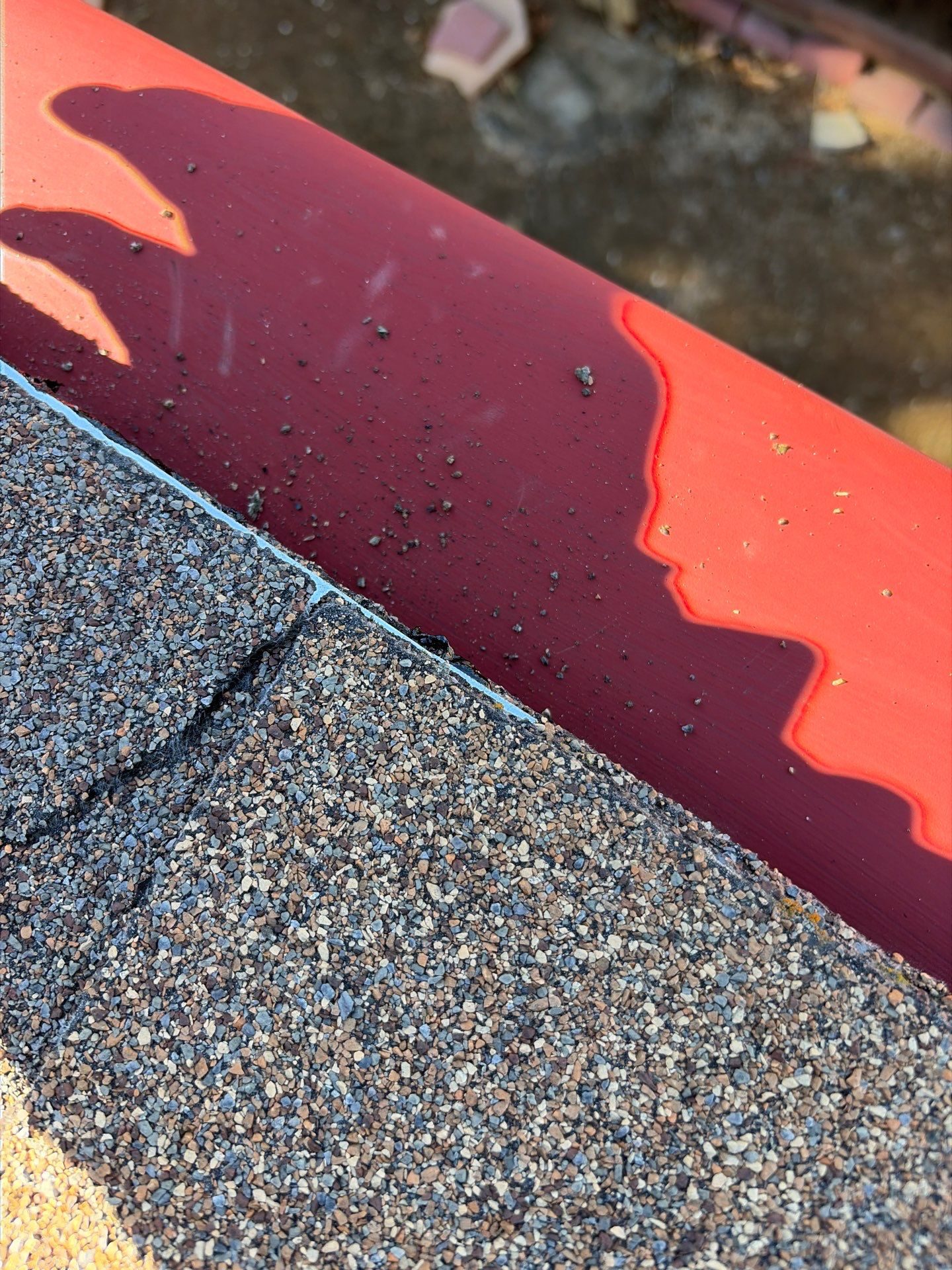
California's residential code requires flashing at roof penetrations, like pipe boots, vent stacks, and chimneys, to be installed according to the shingle manufacturer's instructions, specifically so water can't work its way in where the roof surface is interrupted. The 2025 California Residential Code addresses this directly: flashing against a vertical front wall, as well as soil stack, vent pipe, and chimney flashing, must be applied in accordance with the asphalt shingle manufacturer's instructions. That requirement exists because penetrations and edges are where water concentrates as it drains off the roof field, which is also exactly where we found the cracked shingles in Pittsburg: along the metal edge flashing and near the ridge, not in the open field of the roof.
That's not a coincidence. Roof edges, valleys, and penetrations see more water flow, more flexing from metal-to-shingle transitions, and more thermal stress than a flat run of shingles in the middle of a slope. A crack that would be low-risk in the open field becomes a real leak risk in one of these zones, because there's less margin before water finds a path under the shingle instead of over it. Any inspection should treat cracks near edges, valleys, and penetrations as higher priority than cracks found in the open field, even if the cracks themselves look similar.
How do you tell if cracked shingles need a repair or a full reroof?
Start by counting how widespread the cracking is and checking whether it's paired with granule loss. A handful of cracked shingles isolated to one small area, with the rest of the roof showing good granule coverage and flexibility, usually points to a targeted repair: replacing the damaged shingles and checking the flashing underneath. Cracking that shows up across multiple slopes, especially combined with bald or thinning granule patches, points to a shingle layer that's aging out across the board, where chasing individual cracks with patches just delays a bigger repair. For more on how shingle materials wear out over time, see our guide on how long a roof lasts in the Central Valley.
On the Pittsburg roof, the cracking we documented was limited to the ridge and edge areas rather than spread evenly across every slope, which is the kind of pattern that often responds well to a targeted repair paired with a Roof Maxx treatment to restore flexibility to the surrounding shingles, rather than a full tear-off. Every roof is different, though, and that call should come from a hands-on inspection, not a photo.
It's worth asking any roofer who gives you a number for patch repairs a few direct questions: how many shingles are actually cracked versus just showing granule wear, whether the decking underneath has been checked for soft spots, and whether the existing patches (if any) are being removed or just covered over. A contractor who can answer those specifically has actually inspected the roof rather than quoted from the ground.
What should be on a pre-rain roof checklist if you have cracked shingles?
A short, focused checklist before the rain starts beats a general once-over. First, walk the roof edges, ridge, and any penetrations (vents, pipe boots, skylights) and look specifically for cracks, not just missing shingles, since cracks are easy to miss from the ground. Second, check for old sealant or roofing cement patches; if you find them, treat that spot as a repeat offender that needs a real fix, not another layer of sealant. Third, look at the granules collecting in gutters and downspouts. Granule shedding research shows a small amount is normal, especially on an older roof, but heavy or sudden accumulation paired with visible cracking is a signal to move up your inspection timeline. See our full roof maintenance checklist before the rain for the rest of the pre-season walk-through.
Fourth, have a roofer document what they find with photos and notes, not just a verbal "it's fine" or "it needs replacing." A written record of exactly which shingles are cracked, where, and why matters if you ever need to compare conditions year over year, or if a future storm raises a question about whether damage is new or pre-existing. Fifth, ask about Roof Maxx as an option if the cracking is limited and the rest of the shingle mat still has reasonable flexibility and granule coverage; rejuvenation treatments can extend the life of shingles that aren't yet failing outright, though the company's own current claims about exact figures haven't been something we've independently verified, so ask your inspector what's realistic for your specific roof.
The cracked shingles we found in Pittsburg are a reminder that a patch is a pause button, not an answer. Every roofing cement repair on that job had a crack open back up nearby within what looked like one sun-and-rain cycle, which is the normal failure pattern for a patch applied to a shingle that's already past the point of simple repair. Getting ahead of that cycle, before the rainy season tests every weak point on the roof, is cheaper and less disruptive than responding to a leak after the fact.
If you're seeing cracked shingles, old sealant patches, or heavier-than-normal granules in your gutters, a free roof inspection will tell you whether you're looking at a quick repair, a Roof Maxx candidate, or a roof that's ready for a full reroof before winter rain arrives.
Book your free roof inspection before the rain
We walk the roof, photograph every problem we find, and give you a written recommendation, with no obligation.
Book a free inspectionor call (559) 550-6398
Frequently asked questions
Is it normal for asphalt shingles to crack?
A small amount of cracking develops on every asphalt roof as it ages, especially on slopes facing the most sun. It becomes a concern when cracks appear in clusters, run through multiple tabs, or show up alongside heavy granule loss. Those patterns point to a shingle layer nearing the end of its service life rather than isolated wear.
How long does a roofing cement patch on a cracked shingle last?
A roofing cement or mastic patch is a short-term seal, not a repair. It can buy a season or two on one isolated crack, but the surrounding shingle keeps aging underneath it, and the patch itself dries out and cracks in the sun. If you find old sealant patches during an inspection, treat them as a sign the roof needs a closer look.
What causes granule loss on a roof?
Granules protect the asphalt layer from UV rays, and they loosen over time from sun exposure, heat cycling, foot traffic, and age. Once bare asphalt is exposed, it dries out and cracks faster, which is why granule loss and shingle cracking usually show up together on the same slope.
Can a cracked shingle roof be repaired, or does it need full replacement?
It depends on how widespread the damage is. A handful of cracked shingles on an otherwise sound roof can often be replaced individually or rejuvenated with a treatment like Roof Maxx. Cracking spread across multiple slopes with heavy granule loss usually means a full reroof is the more reliable fix.
Should I worry about cracked shingles near my pipe boots or vents?
Yes. Cracked shingles near penetrations like pipe boots and vents sit right where water already concentrates when it drains off the roof. A crack in that zone has less margin before it becomes a leak path, so penetration areas deserve a closer look during any roof inspection before the rain.
Inspection details describe a roof our crew photographed in Pittsburg, California, on November 4, 2026. Every roof is different; recommendations depend on inspection.