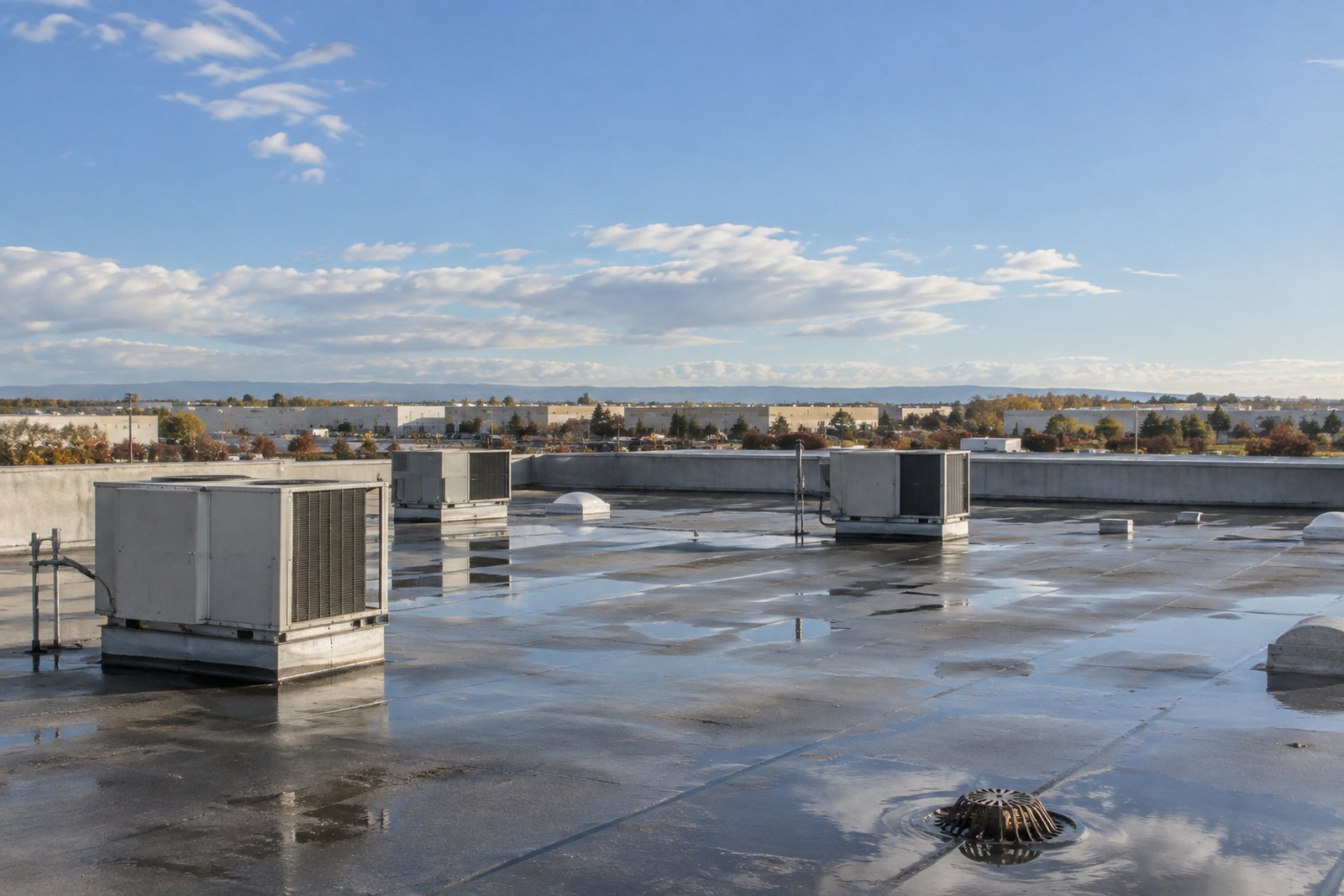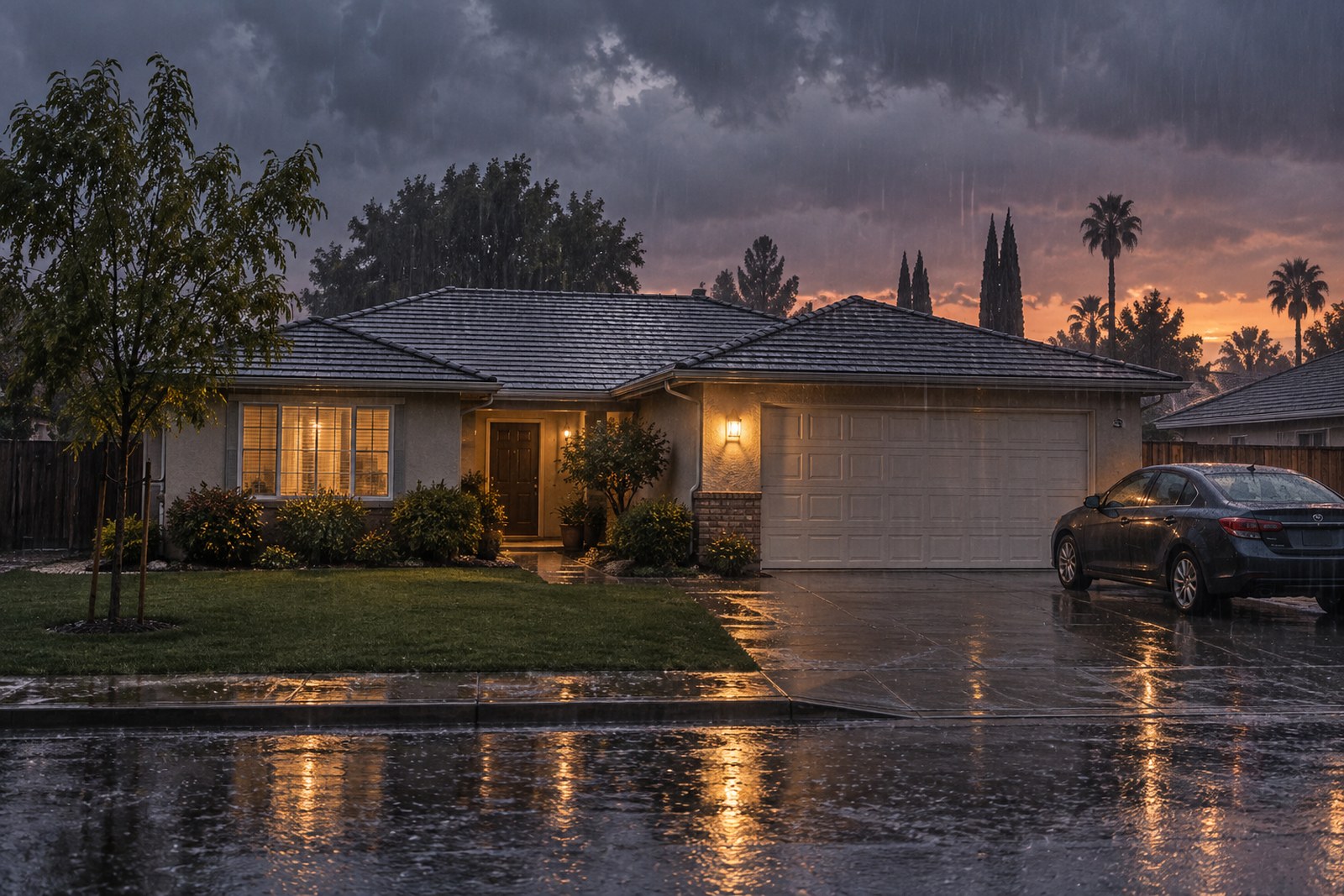
Roof leaks almost never introduce themselves politely. They show up at 9pm during the first real storm of the season, as a brown ring on a hallway ceiling or a drip landing on a laminate floor. The next hour matters more than most homeowners realize, because in that hour you decide how big the repair bill is going to be.
Here is the order of operations we give people who call our Fresno line in the middle of a storm — including the two things that quietly turn a cheap fix into an expensive one.
What Should You Do in the First Hour of a Roof Leak?
Work inside, not outside. In this order:
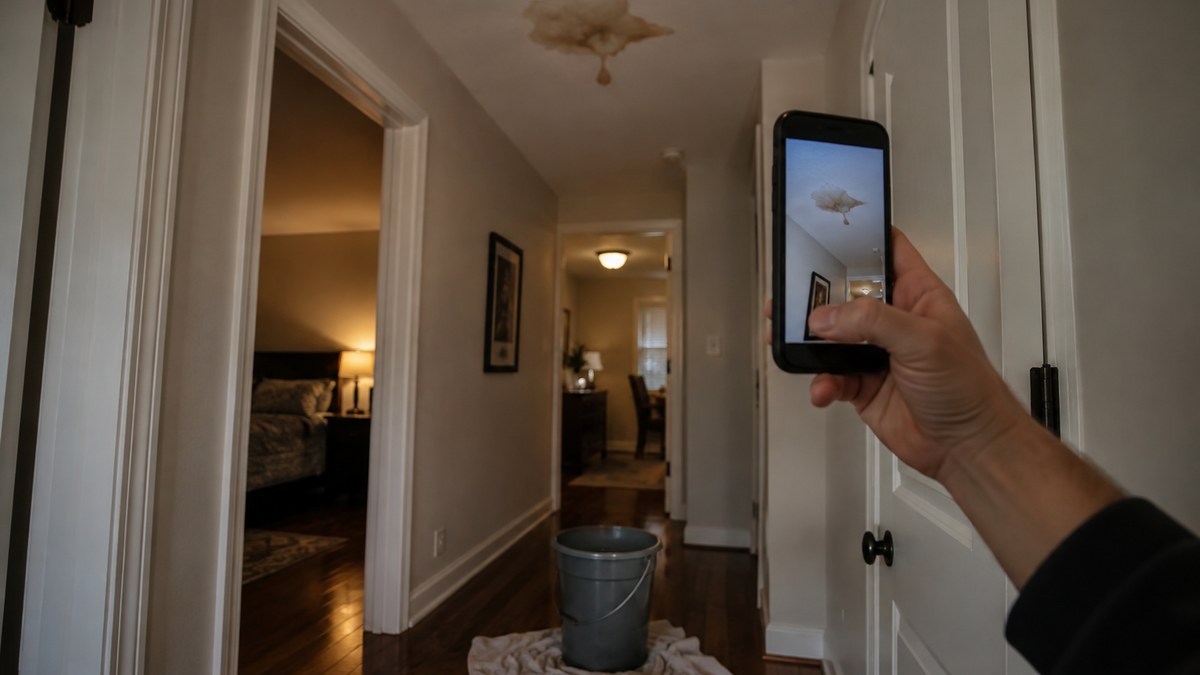
Clear the area. Move furniture, electronics and rugs out from under the drip. Water follows framing and insulation, so the wet spot on the ceiling is rarely directly below the hole in the roof — give yourself more room than looks necessary.
Catch and contain. A bucket with an old towel in the bottom stops the splash-back that soaks a wall. Swap it before it overflows.
Relieve the pressure. If the ceiling is bulging or spongy, drive a small hole in the lowest point of the bulge with a screwdriver and let it drain into your bucket. It feels wrong. Do it anyway. A gallon of water weighs a bit over eight pounds, and a saturated drywall lid that lets go takes the whole sheet, the insulation and everything below it with it. A half-inch hole is a patch; a collapsed ceiling is a room.
Kill power to the area at the breaker if water is anywhere near a light fixture, a can light or a ceiling fan. Do not flip the switch to check.
Photograph everything, before you mop. Wide shot of the room, tight shot of the stain, the bucket, the water in it, a timestamp on your phone. If this becomes a claim, the photos you take in the first hour are worth more than anything you can document a week later.
Then stop. That is the whole list for hour one.
Should You Go On the Roof Yourself?
No — and this is the part of the article we most want people to read twice.
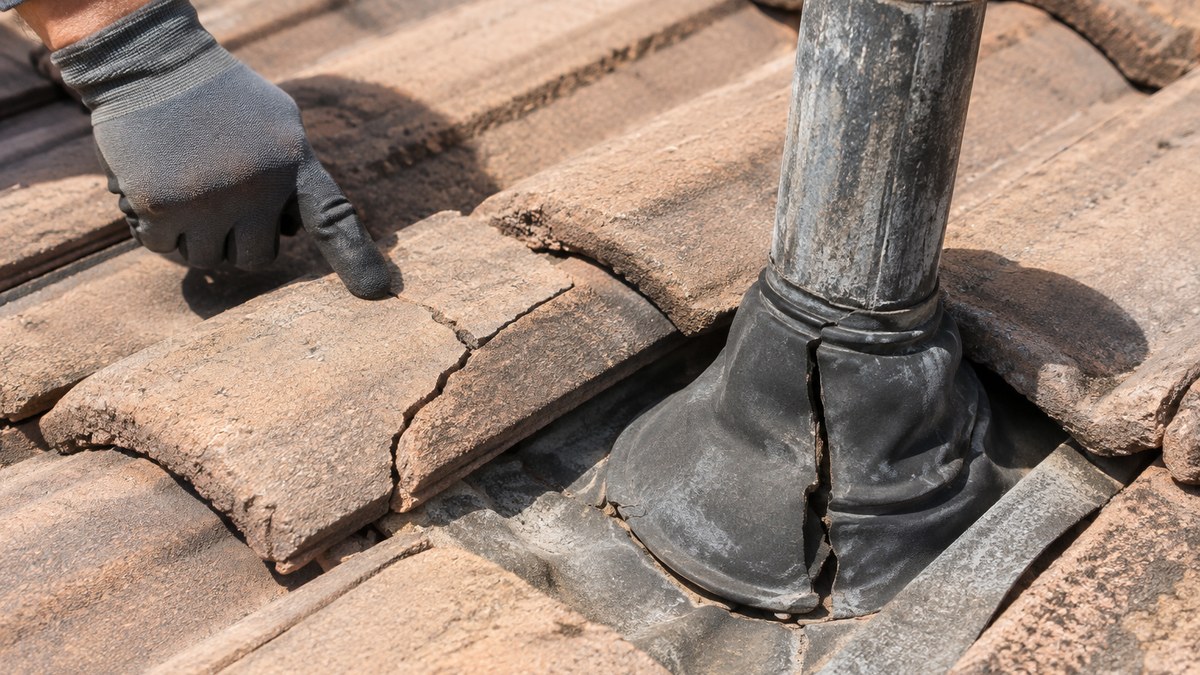
A wet composition shingle roof is roughly as grippy as a wet slide. A wet tile roof is worse: the tiles are slick, they are brittle, and they are not designed to be walked on outside of the load path, so the tile you step on to steady yourself is the tile that breaks and becomes the next leak. Concrete tile is everywhere in the Central Valley, and a meaningful share of the "leaks" we get called out for in Fresno and Clovis are cracked tiles created by someone walking a roof — a satellite installer, a solar crew, a homeowner chasing a drip with a flashlight.
Add wind, add darkness, add a ladder on wet ground, and you have the most common way homeowners get seriously hurt during a storm.
If you must do something outside, do it from the ground: look for shingles in the yard, a downspout pouring out of its seam, or a visibly clogged gutter line. That is information. Getting on the roof in weather is not.
Where Do Roof Leaks Actually Come From?
Almost never from the middle of a good field of shingles. In the Valley, in rough order of how often we find them:
| Source | What it looks like inside | Typical fix |
|---|---|---|
| Failed pipe-jack or vent flashing | Drip near a bathroom or kitchen wall | Replace the boot/flashing |
| Wall and chimney flashing, missing kick-out | Stain running down an interior wall | Rebuild the flashing detail |
| Cracked or slipped tiles | Random ceiling spot after wind | Replace tiles, repair underlayment |
| Worn valley metal | Stain along a ceiling line | Re-line the valley |
| Clogged gutters and blocked scuppers | Fascia rot, water behind the gutter | Clear, re-pitch, repair fascia |
| Skylight curb and seals | Drip at the skylight edge | Re-flash the curb |
| Brittle, granule-bare shingles | Widespread minor staining | Repair, rejuvenate or replace |
Two Valley-specific notes. First, our roofs bake: a decade of 100-degree summers dries out the asphalt binder and the rubber boots long before anything looks dramatic from the street, so the first rain of the season is when everything cashes out at once. Second, most "sudden" leaks are not sudden — they were seeping into sheathing for months and only reached the drywall when the storm supplied enough volume.
Dry-rot at the fascia and eave line has its own pattern and its own pricing, and it needs exact measurements rather than a phone estimate.
How Fast Can a Roofer Actually Come Out?
Same day is realistic. A permanent repair in driving rain usually is not, and any roofer who promises one is selling you something.
What a good emergency response looks like: we get there, we find the source, we dry-in or tarp the area so the water stops, and we schedule the actual repair for the first dry window. Temporary dry-in is not a stall tactic — sealants, underlayment and adhesives need a dry deck to bond, and a "permanent" patch installed into standing water becomes tomorrow's callback.
Ask three questions when you call anyone: Are you licensed and insured? (Ours is CSLB #1126804 — you can look any contractor up on the CSLB site in about a minute.) Is the emergency visit charged as a trip or applied to the repair? Who does the interior drywall and paint?
Our team covers Fresno, Clovis, Madera, Sanger, Selma, Visalia and the Bay Area — see how we handle roof repair in Fresno and what a repair visit includes.
Is This a Repair, an Insurance Claim, or a New Roof?
Three different questions, and the answer usually comes from one number: the age of the roof.
A repair is the right call when the roof is otherwise sound and the failure is a detail — a boot, a valley, a handful of tiles, a flashing. Most leaks are this.
An insurance claim is worth exploring when a specific event caused the damage: wind that lifted shingles, a fallen limb, hail. California policies generally cover sudden accidental damage and generally exclude wear, age and deferred maintenance, so the distinction your adjuster cares about is event versus erosion. This is exactly why the first-hour photos matter, and why we document a leak the same way whether or not you file. We write up findings for claims regularly — start with roof insurance claims.
Replacement enters the conversation when the shingles are brittle across the whole roof, when the granules are gone, or when you are paying for a third repair on the same slope in two years. If the roof is mid-life and drying out but not failing, there is a middle option people do not know about: a roof rejuvenation treatment that restores flexibility to asphalt shingles and buys years, for a fraction of a re-roof. That is what our Roof Maxx rejuvenation work is for, and we are a 5-Star Certified dealer.
One more thing worth doing while the ladder is out. If you live up in the foothills, the same inspection that finds your leak can tell you where you stand on ember-resistant details — wildfire home hardening covers that side.
Leak now? We come out same day.
Licensed California roofers (CSLB #1126804) covering Fresno, Clovis, Madera, Visalia and the Bay Area. We stop the water first, then repair it right.
Get a roofer out todayor call (559) 550-6398
Frequently asked questions
How much does emergency roof repair cost in Fresno?
Most single-point repairs — a vent boot, a flashing detail, a small tile or shingle section — land in the low hundreds to around a thousand dollars, depending on access, roof pitch and how much underlayment or sheathing got wet. Temporary dry-in during a storm is usually billed separately or credited toward the permanent repair. Get the number in writing before work starts.
Should I put a tarp on my roof myself?
Only if the roof is dry, low-slope and safely reachable, and even then it is a two-person job. Tarps must run over the ridge and be fastened above the leak, or rain simply runs underneath them and you have changed nothing. In wind or rain, wait for a crew — an unsecured tarp becomes a sail and can tear off more roofing than the storm would have.
Will my homeowners insurance cover a roof leak?
Usually yes for sudden accidental damage from a covered event such as wind or a falling limb, and usually no for wear, age, deferred maintenance or long-term seepage. Coverage depends on your policy and your adjuster, not on us — what we can do is document the cause, the date and the extent so your claim is decided on evidence rather than assumption.
Can a roof be repaired in the rain?
It can be made watertight in the rain with a dry-in or a tarp, but a lasting repair needs a dry deck. Sealants and self-adhered underlayment do not bond to wet surfaces, and trapping moisture under new material causes rot you will not see for a year. The right sequence is stop the water now, repair properly in the first dry window.
How do I find where the leak is coming from?
Water travels along rafters and sheathing before it drops, so the interior stain can sit several feet from the entry point. Look uphill of the stain for a roof penetration — a vent, a pipe, a skylight, a wall intersection — since penetrations and flashings cause the large majority of leaks. A moisture meter and an attic inspection beat guesswork; that is the first thing our crew does on arrival.
Infinite Roofing Solutions is a licensed California roofing contractor (CSLB #1126804, B / C-39) serving Fresno, Clovis, Madera, the Central Valley and the Bay Area. Nothing here is a coverage determination — your carrier decides claims. For a leak right now, call (559) 550-6398.