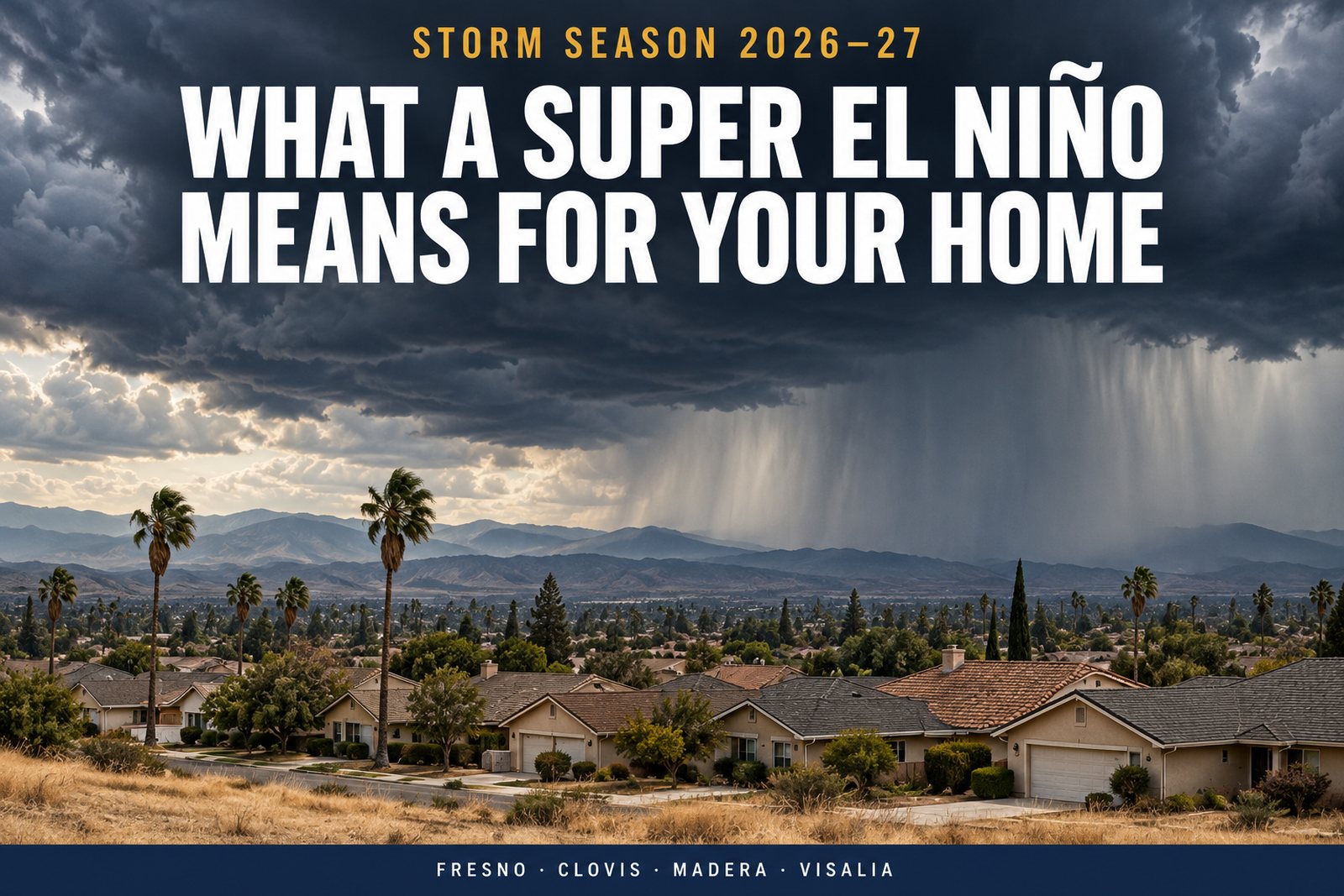
Every few years the word "El Niño" starts showing up on the evening news, and every few years Californians try to remember whether it means rain, drought or nothing at all. This year the forecasters are using a bigger word, super El Niño, and they are using it with unusual confidence.
Here is what the forecast actually says, what it has meant for California homes in the past, and the short list of things worth doing to your house before the first big storm, written by a roofing crew that spends every winter answering leak calls across the Central Valley.
What Is a Super El Niño?
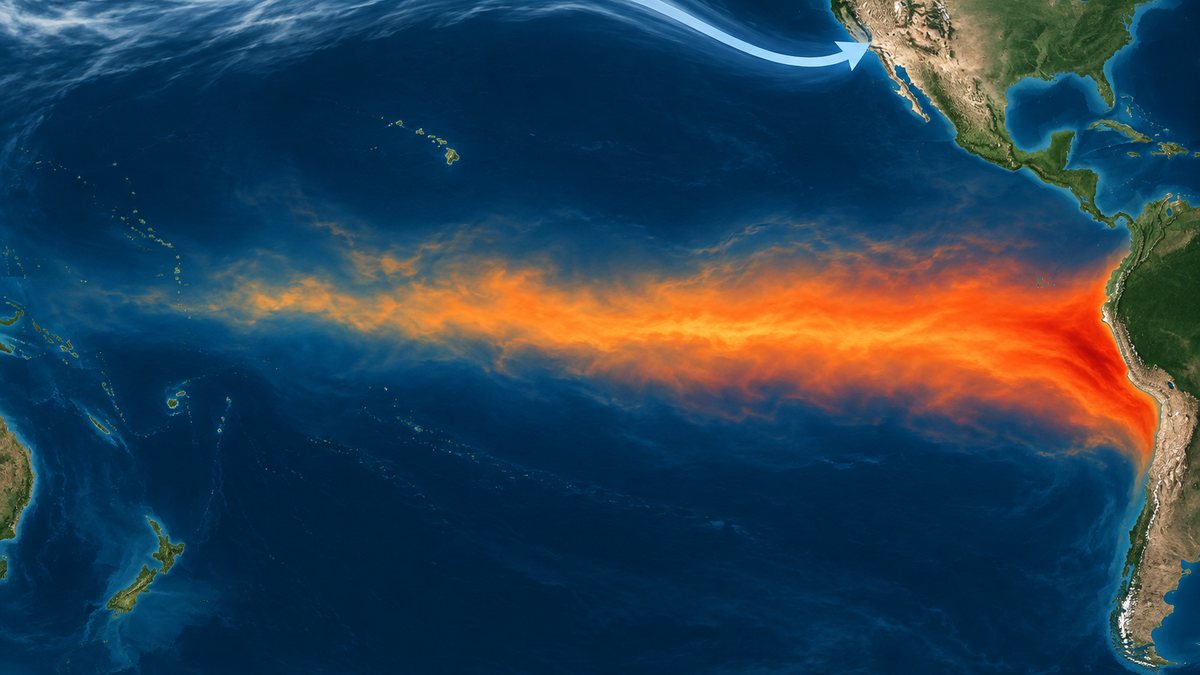
El Niño is a warming of the ocean surface in the eastern and central tropical Pacific. That warm water shifts where thunderstorms form, which bends the jet stream, which changes where winter storms land in North America. A normal El Niño nudges the odds. A strong one pushes them hard.
"Super El Niño" is not an official NOAA category. It is the everyday name for the strongest events on record, the ones where the key ocean region runs roughly 2°C or more above normal for months. The events people usually mean are 1982–83, 1997–98 and 2015–16.
The El Niño 2026 forecast puts this winter in that company. In its September 10, 2026 ENSO discussion, NOAA's Climate Prediction Center said El Niño is strengthening, with a greater than 90% chance of a very strong event during fall and winter 2026–27. It also gave a 75% chance that the October–December period becomes the strongest El Niño measured since 1950. The next official update is scheduled for October 8, and the numbers can move, so check it before you quote it.
Does a Super El Niño Mean More Rain in California?
It raises the odds. It does not promise a flood.
NOAA's seasonal outlook, updated in September, favors wetter-than-normal conditions across California through winter and early spring, with the highest odds, 50 to 60 percent, near the coast from December through April. The wet signal in the October–December window is strongest across the southern half of the state.
History is the honest caveat. The 1982–83 and 1997–98 events brought repeated storms, flooding and mudslides to much of California. The 2015–16 event was one of the strongest ever measured, and Southern California still came in drier than expected. NOAA's own discussion says the chance of typical El Niño impacts is larger with an event this big, "though not guaranteed."
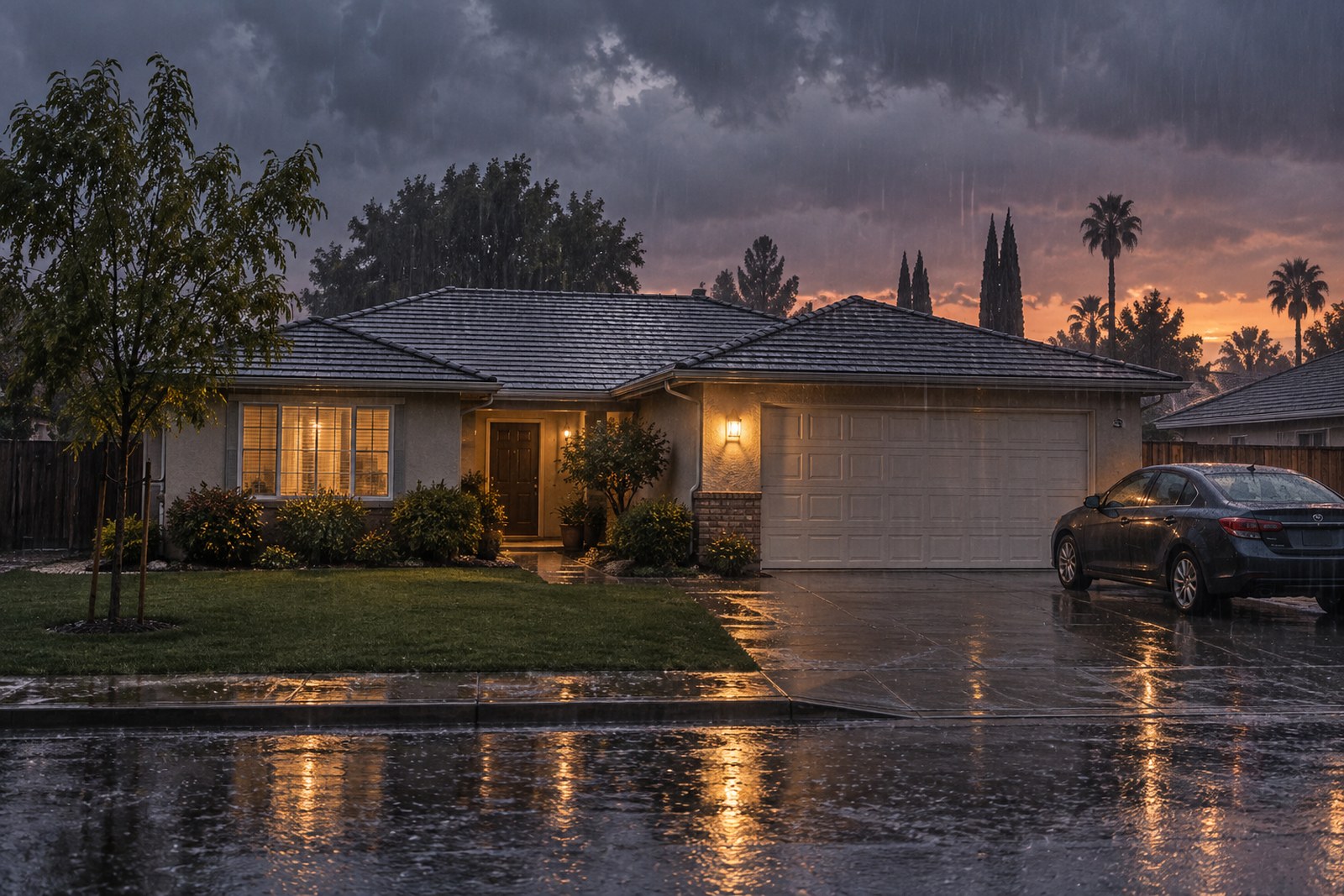
For a homeowner the takeaway is simple. You are not betting on the forecast. You are deciding whether your house can take a wet winter if the forecast is right. Roofs, gutters and drainage have to be ready either way.
What Does El Niño Mean for the Central Valley?
The Valley is where this forecast gets interesting, because our homes are built for heat, not rain.
Fresno averages only about 11 inches of rain in a normal year. A roof here spends long summers baking past 100 degrees and most of the year barely tested by rain. Heat dries out asphalt shingles and the rubber boots around vent pipes, cracks sealant at flashing, and bakes concrete tile until small cracks open up. None of that shows from the street. Then a strong storm system parks over the Valley for three days, and every weak spot fails at once.
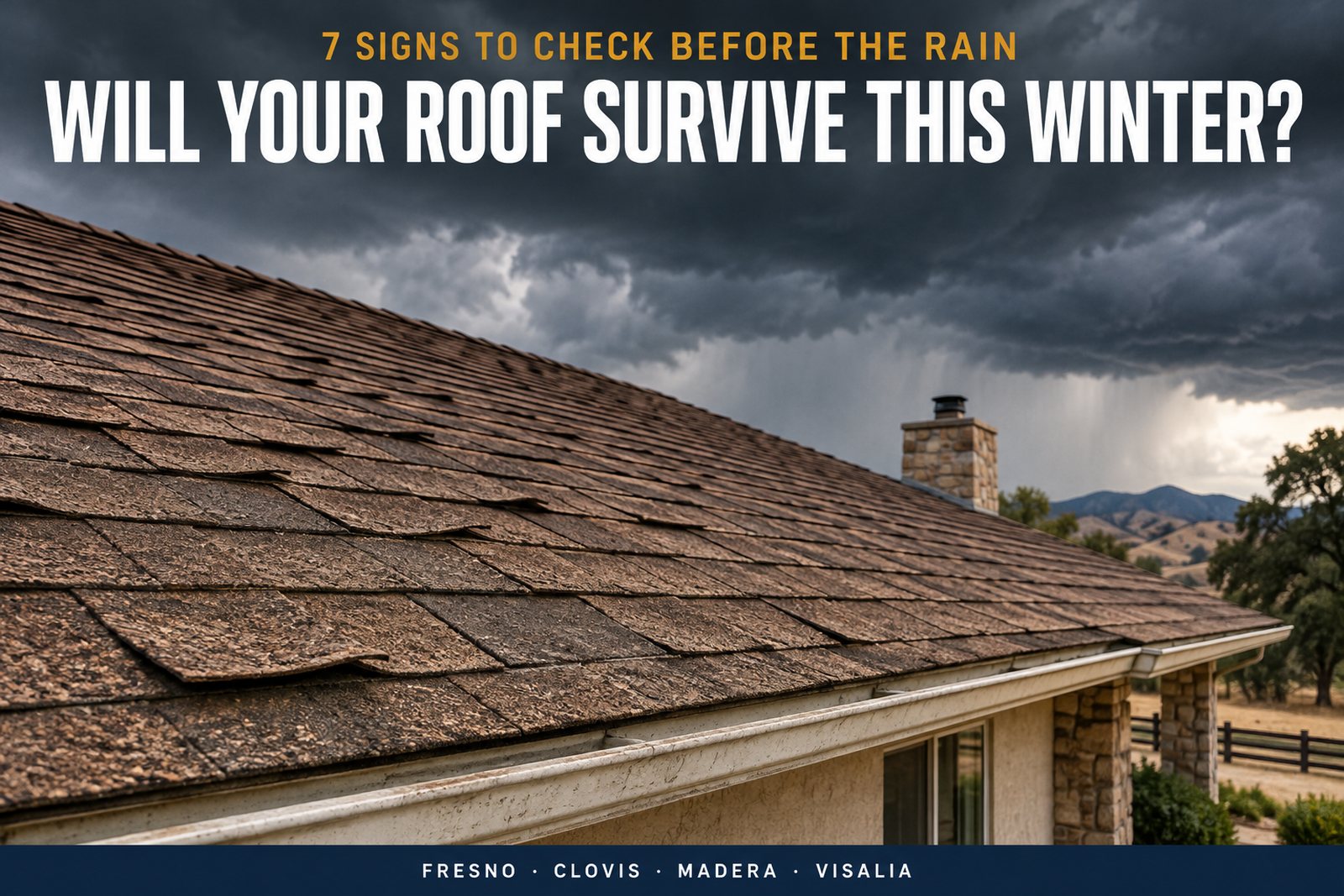
That is the pattern behind most of the leak calls we take in Fresno, Clovis, Madera and Visalia after a big storm. The roof did not break that week. It was already worn, and the storm supplied enough water to find the gap. Our roofing in Fresno crews see the same handful of failure points every winter: pipe jacks, wall flashing, valleys, cracked tile and clogged gutters.
The other Valley problem is timing. Contractors have a fixed number of crews. When the first atmospheric river hits, everyone calls in the same 48 hours, and the schedule fills with emergency tarps before it gets to routine repairs.
How Should You Prepare Your Home for El Niño?
Start at the top and follow the water down. This is the order we use for El Niño roof preparation:
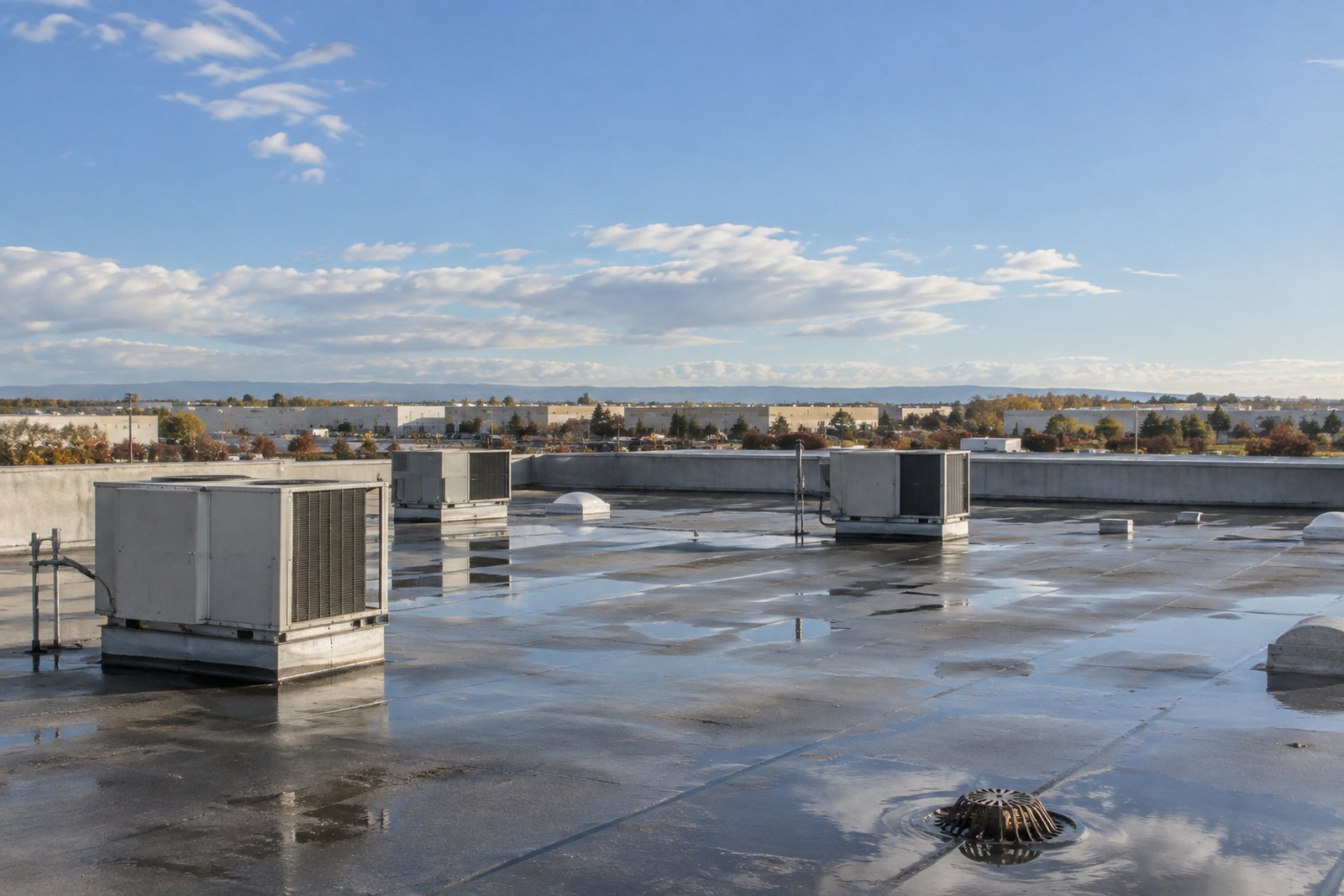
- Get the roof inspected while it is dry. A dry roof can be walked safely, photographed and repaired properly. Sealants, underlayment and coatings need a dry surface to bond.
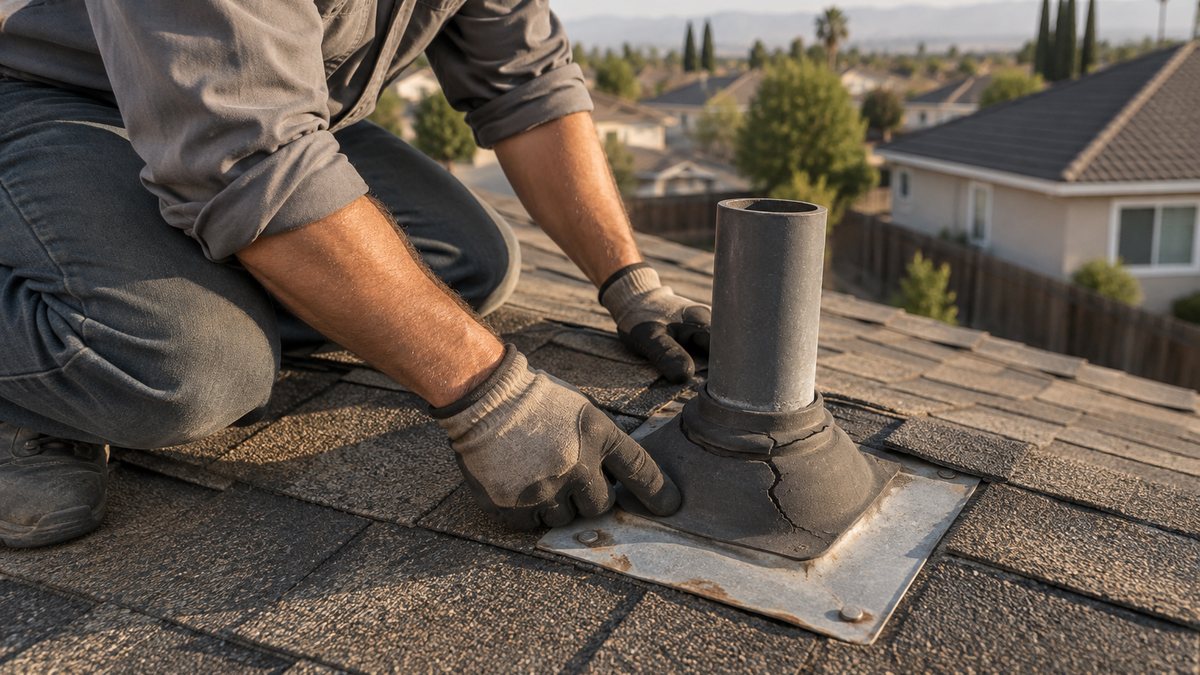
- Fix the small things first. Cracked vent boots, lifted flashing, slipped tiles and missing shingles are cheap to fix in October and expensive to fix in January, after water has reached the decking and drywall.
- Clear gutters and downspouts. Clogged gutters push water back under the roof edge and into the fascia. Make sure downspouts carry water away from the foundation.
- Trim branches over the roof. Wind plus saturated soil brings limbs down, and one limb through the roof turns a small repair into a big one.
- Photograph your roof and ceilings now. A dated "before" set is useful if you ever need to show when damage happened.
- Save a roofer's number. Pick someone licensed before the storm, not during it.
We put the full checklist, and a free storm-readiness inspection, on our El Niño roof preparation page.
Is It Too Late to Get Your Roof Ready?
No, but the window is shorter than most people think.
Any work that needs a dry roof has to happen before the rain settles in. That includes flashing repairs, re-sealing, most tile work, and roof treatments like Roof Maxx, which is sprayed onto a dry roof and restores flexibility to dried-out shingles. Once storms start arriving every week or two, that work waits until spring, and the roof goes through the wettest part of the year as it is.
Roofers also get booked. The weeks right before the first big storm are the easiest time to get on a schedule. The week after it is the hardest.
If your roof is near the end of its life, a dry-season inspection also gives you time to decide between repair and replacement calmly, instead of in the middle of a leak. Our guide to what to do if your roof is leaking right now covers the other side, for when the storm gets there first.
Free storm-readiness roof inspection
Licensed California roofers (CSLB #1126804) covering Fresno, Clovis, Madera, Visalia and the Bay Area. We check your roof while it is dry and give you photos and a plain list of what needs attention.
Book a free inspectionor call (559) 550-6398
Frequently asked questions
What is a super El Niño?
A super El Niño is an informal name for an exceptionally strong El Niño, when ocean temperatures in the central and eastern tropical Pacific run roughly 2°C or more above normal for a season. Recent examples are 1982–83, 1997–98 and 2015–16. NOAA's September 2026 outlook gives a greater than 90% chance of a very strong event this winter.
Is 2026 an El Niño year?
Yes. NOAA's Climate Prediction Center has an El Niño Advisory in effect. Its September 10, 2026 discussion says El Niño is strengthening, with a greater than 90% chance of a very strong event during fall and winter 2026–27. The next official update is scheduled for October 8, 2026.
Will El Niño bring flooding to California this winter?
It raises the odds of a wet winter but does not guarantee flooding. NOAA's seasonal outlook favors above-normal rain across California, strongest near the coast. Past strong events brought major storms in 1982–83 and 1997–98, while 2015–16 left Southern California drier than expected. Plan for a wet winter either way.
When should I get my roof inspected before El Niño?
As early in the fall as you can, while the roof is dry. Dry weather lets a roofer walk the roof safely, find worn flashing and cracked tile, and make repairs that bond properly. Treatments and coatings also need a dry surface. Once storms arrive every week or two, most of that work waits until spring.
Does homeowners insurance cover roof damage from El Niño storms?
Coverage depends on your policy. Most policies treat sudden damage from a covered event, such as wind or a fallen limb, differently from wear, age or long-term leaks. Your carrier decides. What we do is document the damage with photos and a written report so you can file with clear evidence.
Infinite Roofing Solutions is a licensed California roofing contractor (CSLB #1126804) and a 5-Star Certified Roof Maxx dealer serving Fresno, Clovis, Madera, the Central Valley and the Bay Area. Forecast figures are from NOAA's Climate Prediction Center, September 2026. Your insurance carrier decides claims. Book a free storm-readiness inspection at (559) 550-6398.