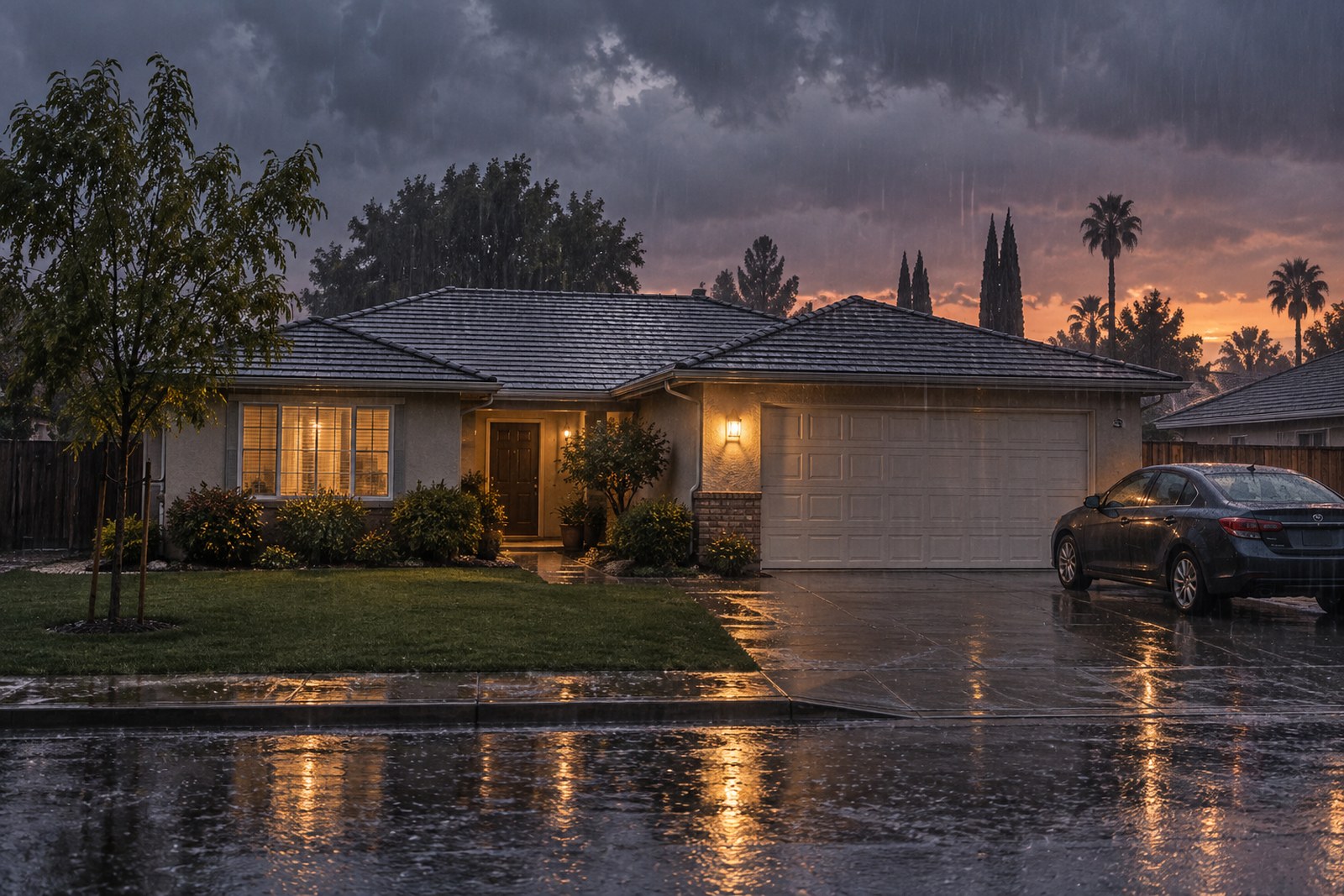
Most roofs don't fail in a single storm. They wear down over years of Central Valley summers, and then the first big storm finds every weak point at once. That matters more than usual this year. NOAA forecasts a greater than 90% chance of a very strong El Niño this winter, which raises the odds of a wet season across California.
The good news is that you can see most of the warning signs yourself, from the ground and from inside the house, in about fifteen minutes. Here is what to look for, what each sign means, and how to decide between doing nothing, repairing, or planning for more.
How Old Is Your Roof, and Does It Matter?
Age is the first clue, not the final answer.
Different materials age at different rates, and Valley heat speeds all of them up. Asphalt shingles take the most punishment. Years of 100-degree afternoons bake out the oils that keep them flexible, so a shingle roof here often looks older than its age. Concrete and clay tile last much longer, but the underlayment beneath the tile usually wears out long before the tile does, and that layer is what actually keeps water out. Metal roofs age well but depend on fasteners and seams.
If you don't know how old your roof is, check your home purchase paperwork, the city or county permit record, or ask a neighbor who has lived on the street longer. A roof that was already old when you bought the house deserves a closer look before a wet winter.
Age alone doesn't condemn a roof. A well-kept older roof can outlast a neglected newer one. It just tells you how carefully to read the other signs.
What Are the Signs You Need a New Roof?
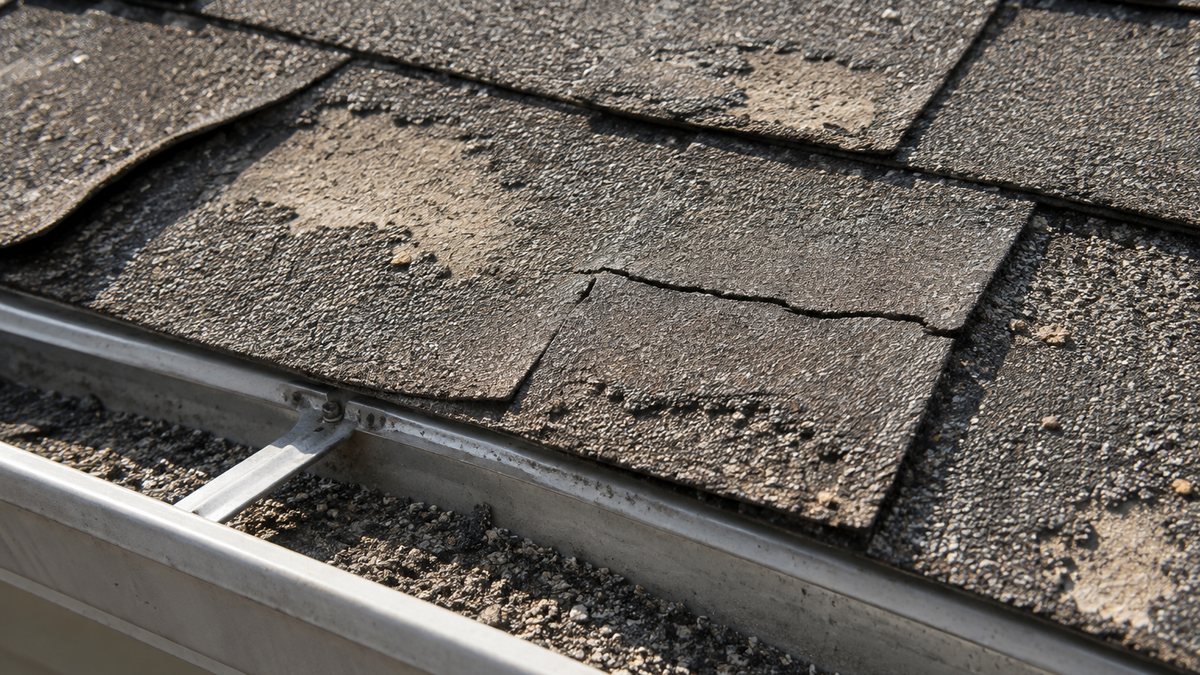
Stand across the street, then walk the yard. Binoculars help. These are the signs you need a new roof, or at least a close look:
- Curling or cupping shingles. The edges lift or the middles sink. That is heat damage, and lifted edges let wind-driven rain underneath.
- Cracked or brittle shingles. Straight cracks across the tab mean the shingle has lost its flexibility.
- Bald spots and granules in the gutters. The granules protect the asphalt from the sun. When they wash off, the shingle ages fast.
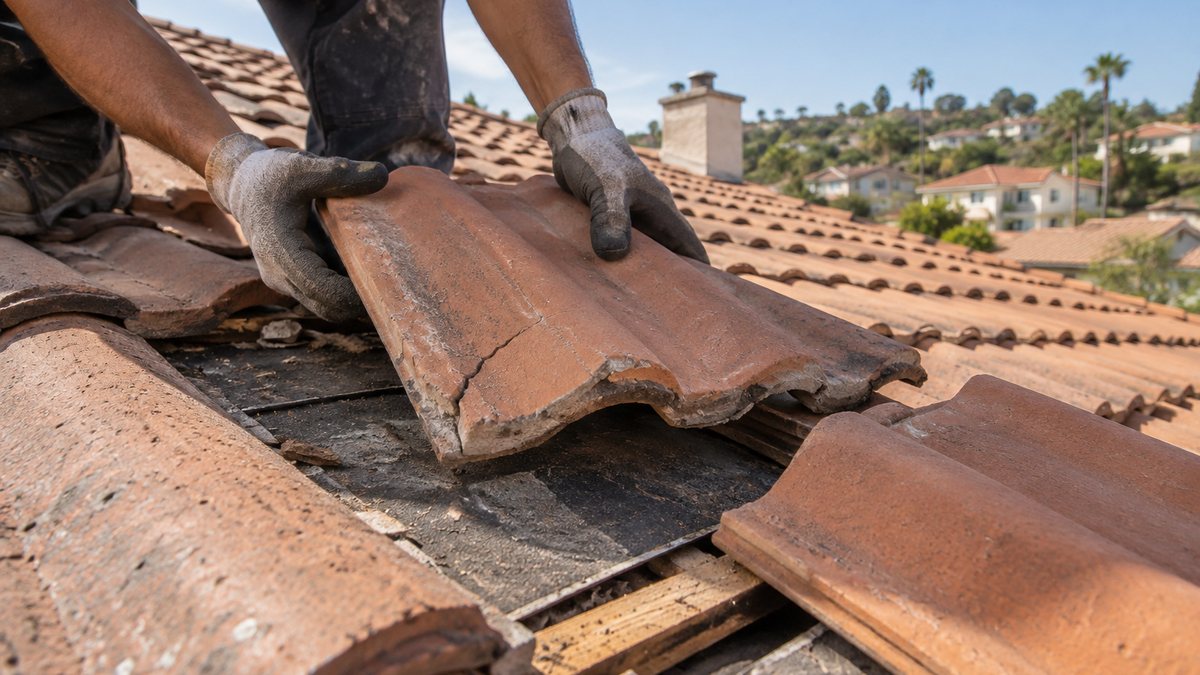
- Missing, slipped or cracked tiles. One broken tile can let water reach the underlayment.
- Rusted or lifted flashing around chimneys, walls, vents and skylights, where most leaks start.
- Sagging lines along the ridge or between rafters, which can mean wet or weakened decking.
- Dark streaks, moss or debris piles in valleys, where water concentrates and drains slowly.
One sign on one slope is usually a repair. Several signs across the whole roof point to a roof near the end of its life.
What Should You Check Inside Your House?
The inside of your house often shows roof trouble before the outside does.
Look at the ceilings in every room, especially near exterior walls, around bathroom and kitchen vents, and under valleys. Watch for brown rings, yellow stains or bubbling paint. A stain that grows after rain is an active leak. A stain that never changes may be old but still worth checking.
If you have attic access, go up on a sunny day with a flashlight. Pinholes of daylight through the roof deck, dark water marks on rafters, damp or flattened insulation, and a musty smell all point to water getting in. Check around every pipe and vent that passes through the roof.
Also notice your energy bills and indoor comfort. An attic that runs very hot in summer can mean poor ventilation, which cooks shingles from underneath and shortens their life.
Can a Roof Be Repaired Instead of Replaced Before Winter?
Often, yes. Replacement isn't the only answer, and a good roofer should tell you when it isn't needed.
A repair makes sense when the roof is sound overall and the problem is a detail: a cracked vent boot, a lifted flashing, a few broken tiles, one worn valley. Most leaks we find in Fresno and Clovis are this kind. Our roof repairs page explains what a repair visit covers.
Rejuvenation fits a shingle roof that is drying out but not failing. A Roof Maxx treatment is sprayed onto a dry roof and restores flexibility to dried-out shingles. It is the wrong choice for a roof with widespread damage or soft decking, and we will say so if yours is past that point. Learn more on our Roof Maxx page. We are a 5-Star Certified Roof Maxx dealer.
Replacement is the honest answer when the shingles are brittle across every slope, the decking is soft, or you are paying for the third repair on the same area. See how we approach re-roofing.
Timing matters for all three. Repairs, treatments and coatings need a dry roof, so the weeks before the first storm are the time to do them.
When Should You Call a Roofer Before the Rain?
Call now if you see any of these: an active ceiling stain, daylight in the attic, sagging, several missing shingles or tiles, or a roof you already know is near the end of its life. Waiting for the first storm to confirm the problem costs more, because by then water has reached the decking, insulation and drywall.
Call soon, even without a visible problem, if your roof is older, if you haven't had it looked at in years, or if you just want a clear answer before a winter NOAA expects to be wet.
A professional inspection covers what you can't see from the ground: flashing, underlayment, penetrations, decking and drainage. It should end with photos and a plain list of what needs attention now, what can wait, and what can be left alone. Ours is free, and you can book it on our El Niño roof preparation page. Homeowners in Clovis can also see our roofing in Clovis page.
Not sure your roof will make it? Get a free inspection.
We check flashing, underlayment, penetrations and drainage while the roof is dry, then tell you what needs attention now, what can wait and what is fine.
Book a free inspectionor call (559) 550-6398
Frequently asked questions
How long does a roof last in the Central Valley?
It depends on the material, the installation and upkeep. Valley heat shortens the life of asphalt shingles because it dries out the oils that keep them flexible. Concrete and clay tile last much longer, but the underlayment beneath them wears out first. An inspection tells you where your roof stands better than its age alone.
Can I tell if my roof needs replacing from the ground?
You can spot many warning signs from the ground: curling or cracked shingles, bald spots, missing or slipped tiles, rusted flashing and sagging lines. Granules piling up in gutters are another clue. What you can't see is the underlayment, decking and flashing details, which is why a close inspection matters before a wet winter.
Is a small ceiling stain a big deal?
It can be. A stain means water has already passed through the roof, the decking and the insulation to reach the drywall. If it grows after rain, the leak is active. Small leaks caught early are usually simple repairs. Left through a wet winter, they can rot decking and ruin insulation.
Should I repair or replace my roof before the rainy season?
If the roof is sound overall and the problem is limited to a few spots, a repair before the rain is usually the right call. If shingles are brittle across the whole roof or the decking is soft, replacement may be the honest answer. Either way, the decision is easier to make in dry weather than during a leak.
Is a roof inspection free?
Ours is. Infinite Roofing Solutions offers free roof inspections across Fresno, Clovis, Madera, Visalia and the rest of our service area. You get photos of what we find and a plain list of what needs attention now, what can wait, and what is fine. Call (559) 550-6398 to book one.
Infinite Roofing Solutions is a licensed California roofing contractor (CSLB #1126804) and a 5-Star Certified Roof Maxx dealer serving Fresno, Clovis, Madera, the Central Valley and the Bay Area. Forecast figure from NOAA's Climate Prediction Center, September 2026. Book a free roof inspection at (559) 550-6398.