
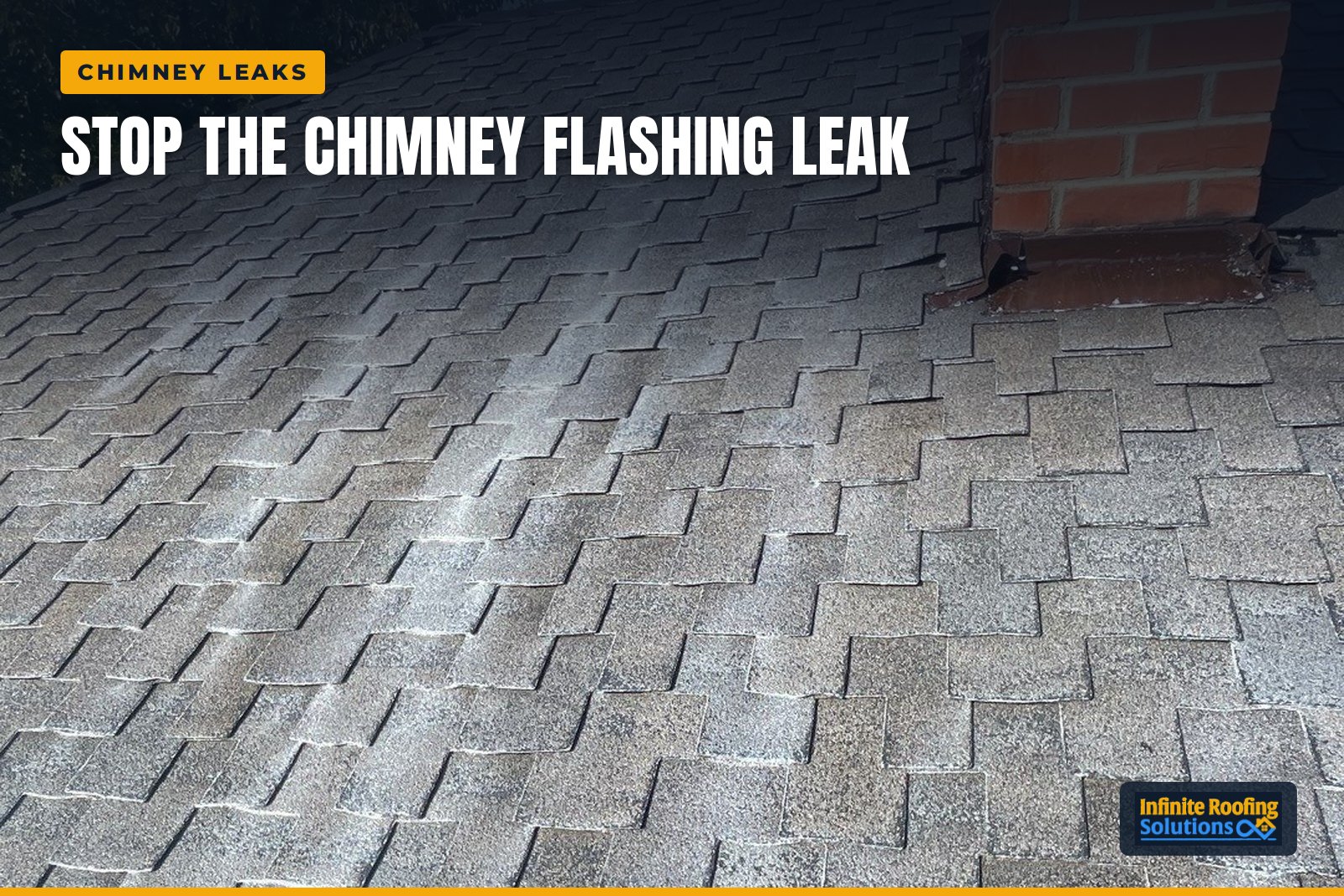
A chimney is one of the few spots on a roof where two completely different materials meet: brick or stucco masonry butting up against shingles, plywood, and felt. That junction is sealed by a thin system of metal called flashing, and when it fails, water finds the fastest way into your attic. If you've noticed a stain on the ceiling near the chimney, or discoloration on the shingles right around it, the flashing is the first place a roofer should look — not the chimney itself.
This guide walks through why chimney flashing fails, what the signs look like, what a real Central Valley crew found on one Atwater roof, and how the repair actually gets done.
What causes a roof to leak around the chimney, and what does it look like?
Flashing failure is by far the most common cause. The chimney and the roof deck move independently — metal expands and contracts with heat, masonry shifts slightly as the house settles — and that constant, small movement works flashing loose over years. A properly built chimney flashing system has two layers: step flashing, individual L-shaped metal pieces woven between each row of shingles up the side of the chimney, and counterflashing, which is set into the mortar joints above and laps down over the step flashing to keep water from ever reaching it. When either layer rusts through, pulls away from the brick, or was installed as one continuous strip instead of individual step pieces, rain runs behind the metal instead of over it.
Masonry problems can cause leaks too. Porous brick or a cracked chimney crown absorbs water directly, and in cold snaps that trapped moisture freezes and expands, widening the cracks each season. A missing or damaged top cover lets rain fall straight down the flue. But in most roof calls, the flashing is where the water is actually getting in, even when the visible stain is on a wall a few feet away.
From the ground, the signs are often subtle before they become a full leak. Rust streaks running down the brick below the flashing line are one of the clearest indicators — they mean the metal itself is corroding. Shingle discoloration and granule loss concentrated right next to the chimney, rather than spread evenly across the roof, usually means water has been sitting or running differently in that one spot for a while. Lifted or curled shingle edges near the chimney base can also point to trapped moisture underneath. From the attic, check the decking and framing closest to the chimney chase — darkened or soft plywood, rusted nail heads, or damp insulation in that specific area, while the rest of the attic looks dry, is a strong sign the leak path starts at the chimney flashing rather than somewhere else on the roof.
Is it ever safe to just caulk or seal chimney flashing myself?
A bead of roofing cement or sealant over a visible gap can slow a leak for a short time, but it is not a repair and it does not hold up. Flashing is designed as a layered system specifically so that water sheds over the metal even as the roof and chimney move differently through the seasons. Sealant is rigid once it cures; it cracks the first time that movement happens again, and the leak comes back, often in a slightly different spot than where you patched. Climbing onto a roof pitch to work around a chimney is also one of the more dangerous DIY jobs a homeowner can take on, especially near a roof edge or steep slope. If you can see rust, lifted edges, or shingle damage around the chimney, the flashing needs to be replaced, not sealed over.
How do roofers fix a roof leak around the chimney?
A proper repair starts with removing the shingles around the chimney so the old flashing can come out completely — reusing old step flashing on a repaired or re-shingled roof is one of the most common reasons the same leak comes back within a year or two. New step flashing is woven in one piece per shingle course, same as a new roof installation, so each piece can move independently with the roof. New counterflashing is then set into a fresh reglet cut into the mortar joints, or into the existing reglet if it's still sound, and sealed at the top edge. For chimneys wider than 30 inches on the upslope side, a cricket (a small peaked ridge built behind the chimney) is added to route water around the back of the chimney instead of letting it pool against it.
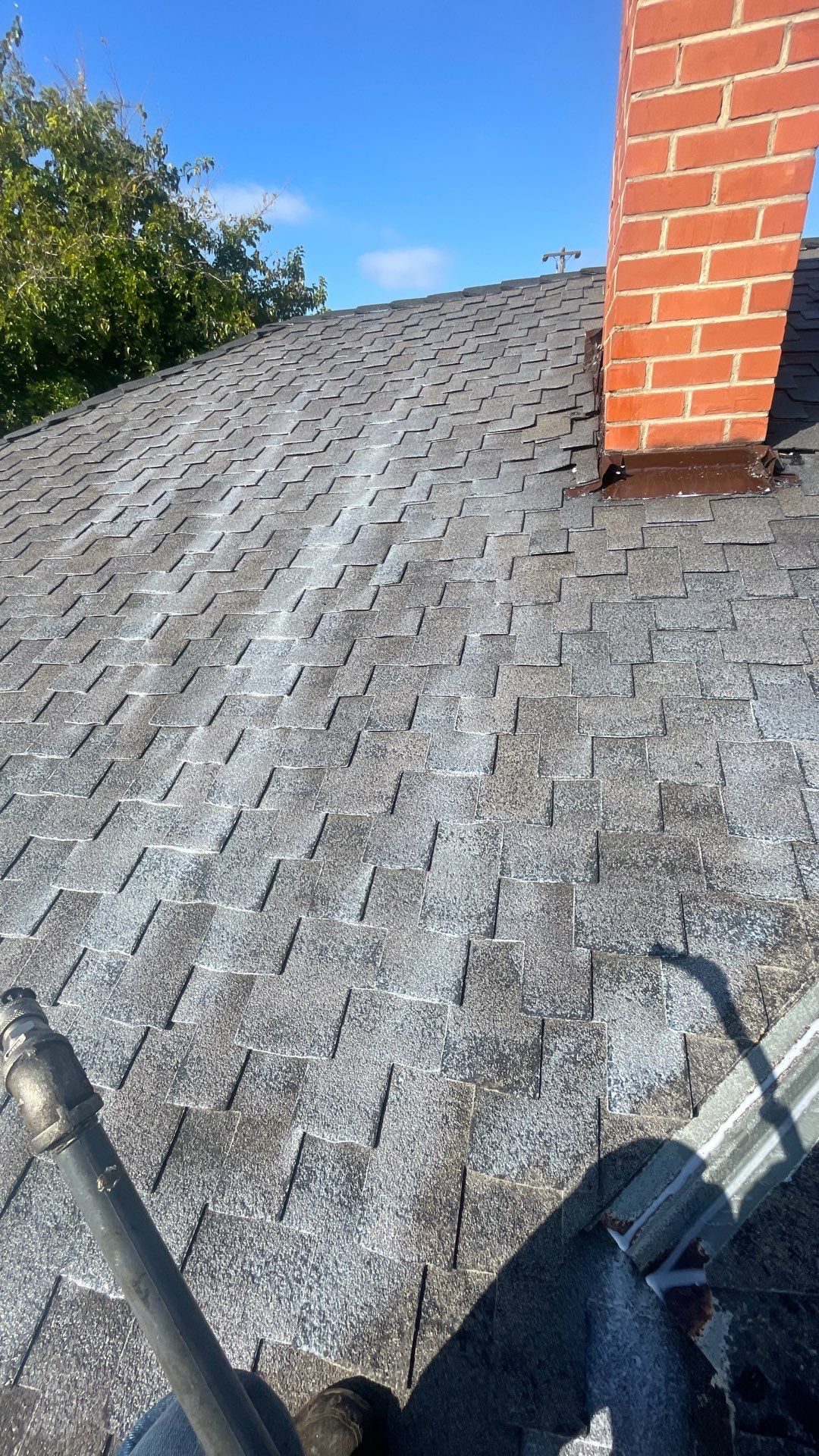
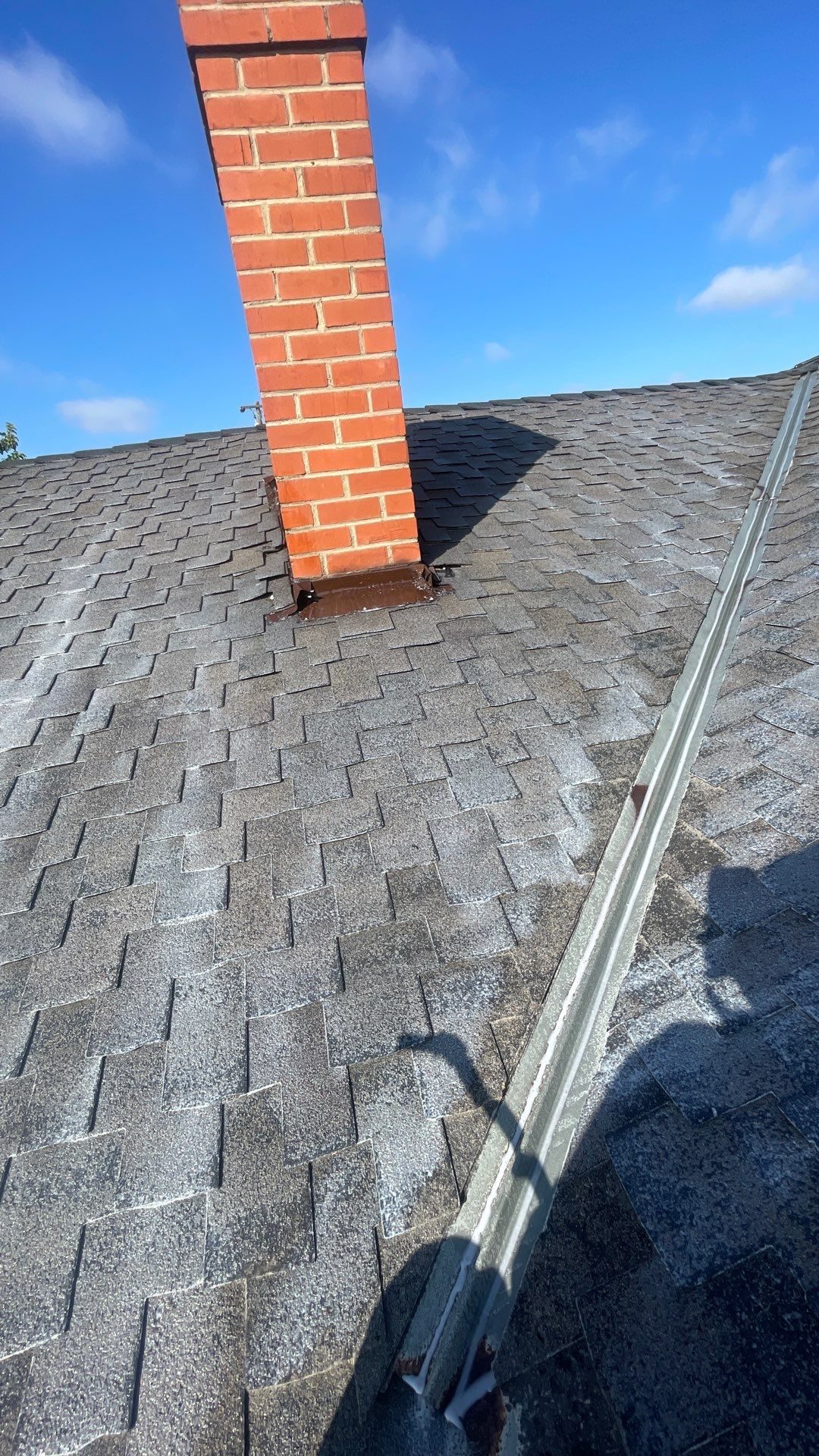
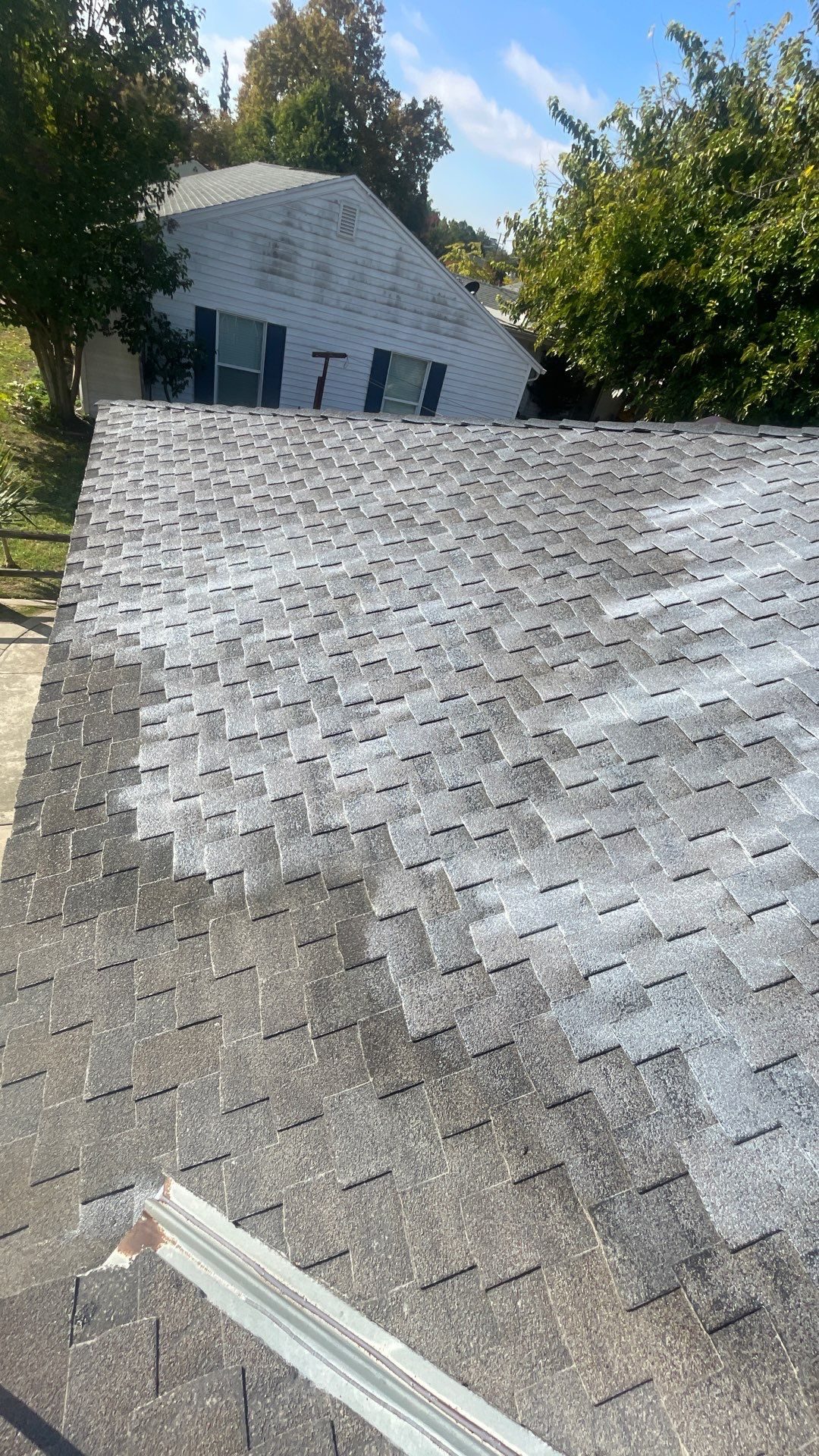
At a recent job in Atwater, California, our crew worked a roof with a brick chimney showing the kind of wear that points to a flashing problem: discoloration and granule loss on the shingles immediately around the chimney base, the sign of water behaving differently in that one spot for some time. The crew set up ladder access to the chimney area to inspect the flashing and surrounding shingles closely, and photographed a newly shingled section of the same roof showing the clean, consistent shingle coursing a proper tie-in should look like once the area around the chimney is corrected.
What does the building code require for chimney flashing?
The International Residential Code sets minimum standards for exactly this detail because it fails so often. Per the IRC chimney flashing requirements, chimneys must be flashed and counterflashed to a height of at least 6 inches, and any chimney wider than 30 inches on the upslope side needs a cricket, flashed and counterflashed the same way. Step flashing is required regardless of roof pitch, and it has to be installed as individual pieces woven into each shingle course, not a continuous strip relying on sealant alone.
Industry guidance backs up what the code requires. The International Institute of Building Enclosure Consultants has documented the counterflashing installation errors that show up most often on brick chimneys, including missing overlap between the counterflashing and step flashing and counterflashing installed without a proper drip edge — small details that matter because they're exactly where water gets back in. Why do roofs leak around chimneys so much more than other parts of the roof? Because the chimney interrupts the single continuous roof surface and relies entirely on this layered metal detail to stay watertight, with no shingle overlap to fall back on if the flashing is wrong. A separate look at common causes of chimney leaks points to the same two culprits: failed flashing and porous or cracked masonry.
When should I call a roofer instead of waiting on a chimney leak?
Call as soon as you notice staining on a ceiling or wall near the chimney, rust streaks on the brick, or shingle discoloration concentrated right at the chimney base. Chimney flashing leaks rarely stay small — water that gets behind the flashing lands on the roof deck and framing, and left alone it leads to soft or rotted sheathing, which turns a flashing repair into a much bigger decking repair. A roofer should inspect both the flashing and the masonry (crown, top cover, and mortar joints) before recommending a fix, since more than one issue is often at play.
Chimney flashing is also worth checking any time you're already having other roof work done. If it's been years since your last look at the roof, our roof maintenance checklist before the rain covers where flashing and chimney checks fit alongside gutters, shingles, and attic ventilation. If you're in a wildfire-prone part of the Central Valley or foothills, ask the same crew to check the chimney cap and screening for ember resistance while they're already up there — see our fire hardening guide for what that covers. On any inspection, we document what we find on your roof; your carrier decides what that means for your policy — we document, your carrier decides.
If you're seeing any of these signs around your own chimney, a free roof inspection will tell you whether it's a flashing repair or something more. Our crews work chimneys across the Central Valley, from Fresno to Merced and surrounding areas, and we'll show you exactly what we find before any work starts.
Book your free roof inspection before the rain
We walk the roof, photograph every problem we find, and give you a written recommendation, with no obligation.
Book a free inspectionor call (559) 550-6398
Frequently asked questions
Is a roof leak around the chimney always a flashing problem?
Not always, but flashing is the most common cause. Step flashing and counterflashing seal the joint between the roof and the chimney, and when that metal rusts, pulls loose, or was installed as one continuous strip instead of individual pieces, water finds a path behind it. Cracked mortar or a damaged chimney top can also let water in, so a roofer needs to check the whole chimney, not just the flashing.
Can I patch chimney flashing myself with caulk or roofing cement?
A bead of sealant over a gap can buy a little time, but it is not a repair. Flashing is a layered metal system designed to shed water even as the roof and chimney move differently in heat and cold; sealant alone cracks and fails again within a season. If you see rust streaks, lifted metal edges, or shingle discoloration near the chimney, the flashing itself needs to be replaced.
How do I know if the leak is coming from the chimney and not the roof field?
Water stains that start at the ceiling nearest the chimney, rather than spread evenly across the attic, usually point to the chimney. Inside the attic, look for darkened decking, rusted nails, or damp insulation close to the chimney chase. From the ground, binoculars can show rust streaks or shingle discoloration right around the chimney base — both are signs the flashing is letting water through.
How long does chimney flashing usually last before it needs replacing?
Most metal flashing holds up well for 15 to 20 years, but that depends on the material and how exposed the chimney is to sun and temperature swings. Galvanized flashing tends to rust sooner than copper or aluminum. If your roof is older than that and the chimney flashing has never been replaced, it's worth having a roofer check it even if you haven't noticed a leak yet.
When does chimney flashing need full replacement instead of a repair?
If the step flashing is rusted through, was reused from an old roof, or is missing pieces, patching it does not fix the underlying problem. Full replacement means removing shingles around the chimney, installing new step flashing and counterflashing, and re-shingling the area. Reusing old flashing on a new roof is one of the most common reasons chimney leaks come back.
Job details describe a roof our crew inspected and photographed in Atwater, California, on November 4, 2026. Every roof is different; recommendations depend on inspection.