Ask five roofers how long a roof lasts and you will hear five numbers. Most of them are national averages, and the Valley is not an average place to own a roof.
Fresno logged 69 days at 100°F or hotter in 2021, the most on record, according to the National Weather Service in Hanford. Long, hot summers followed by wet winters put more stress on a roof than the same roof would see near the coast.
Below is what we actually see on Central Valley roofs, material by material, and what you can do to get more years out of yours. We are a licensed California roofing contractor (CSLB #1126804) and a 5-Star Certified Roof Maxx dealer, so these numbers come from roofs we inspect every week from Bakersfield to Sacramento and the Bay Area.
How Long Does Each Type of Roof Last in the Central Valley?
The material sets the ceiling. The weather, the attic and the upkeep decide how close you get to it.
| Roof type | Typical life in the Valley | What usually fails first |
|---|---|---|
| 3-tab asphalt shingles | 15 to 20 years | Shingles dry out, crack and lose granules |
| Architectural (laminated) shingles | 20 to 25 years | Ridge caps, then the field shingles on the south and west slopes |
| Concrete or clay tile | 50+ years for the tile | Underlayment under the tile, often around 20 to 30 years |
| Metal (standing seam) | 40+ years | Fasteners, sealants and flashing details |
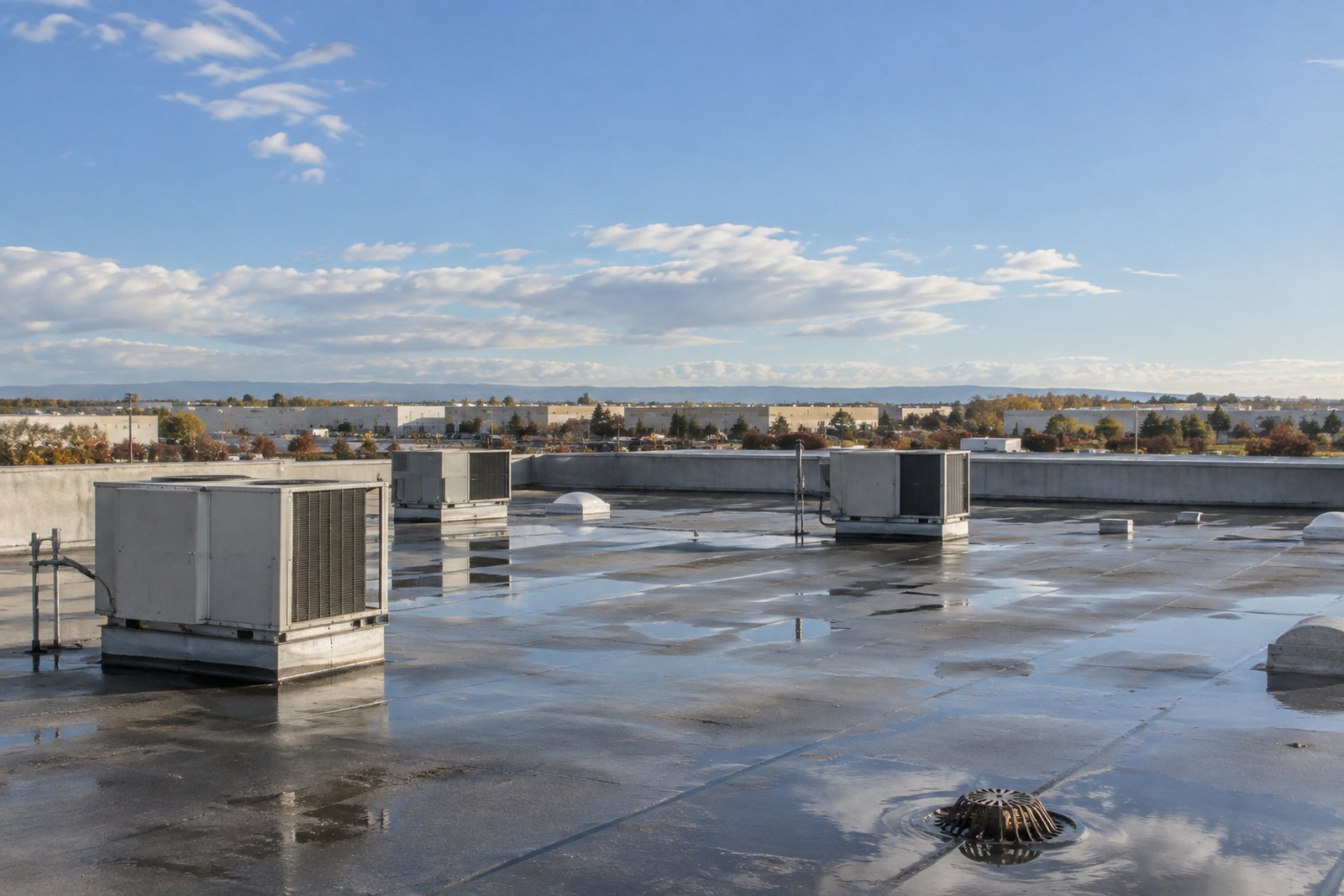
| Flat or low-slope (TPO, modified bitumen, coatings) | 15 to 25 years, depending on system | Seams, drains and areas where water ponds |
Two notes on that table. First, these are typical ranges, not promises; a well-ventilated roof that gets maintained can beat them, and a roof over a hot, unvented attic can fall short. Second, tile is the one people misjudge most. The tile itself may outlive the house, but it is not the waterproof layer. The felt or synthetic underlayment underneath is, and in Valley heat it often wears out decades before the tile does.
Why Do Roofs Wear Out Faster in Fresno and the Valley?
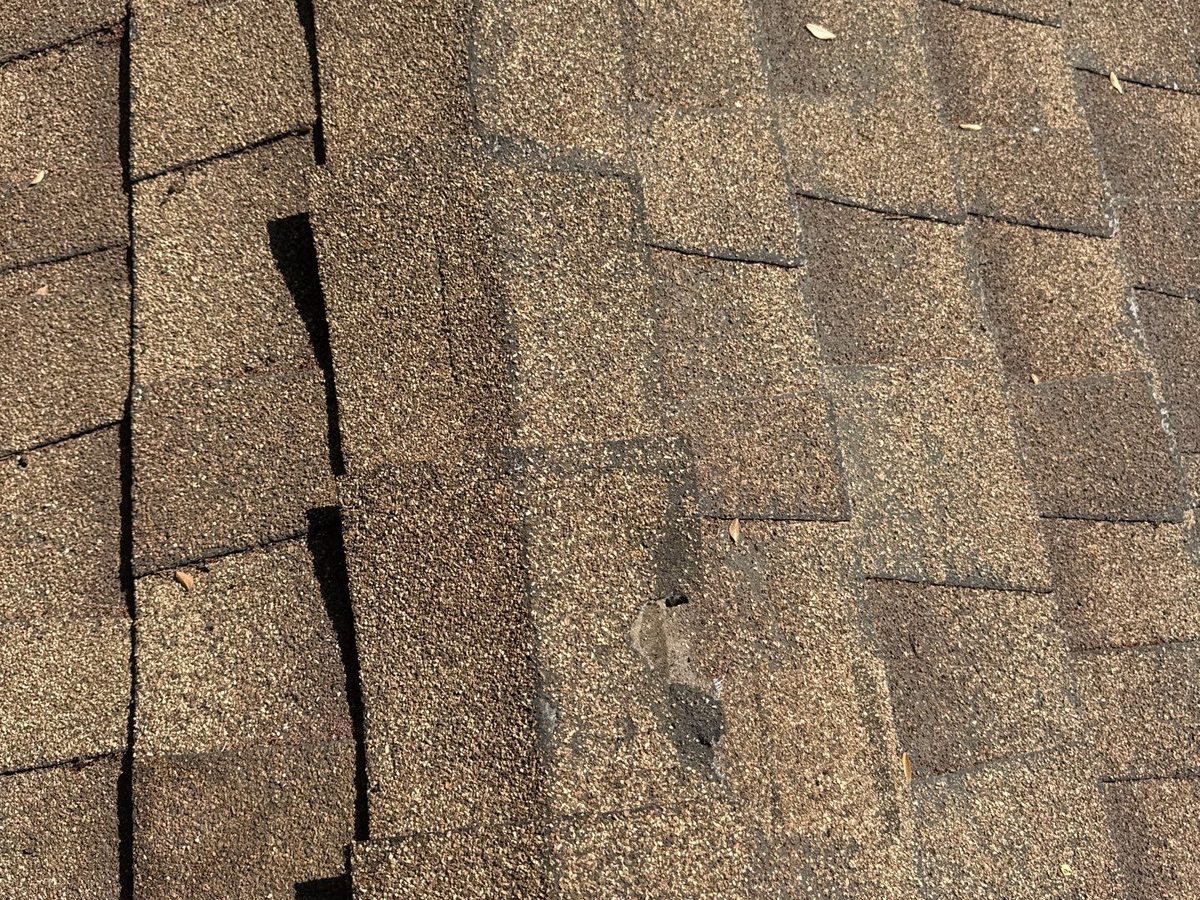
Mostly because of heat and sun. Asphalt shingles are held together by oils in the asphalt. UV and heat bake those oils out year after year. As they leave, the shingle gets stiff and brittle, the granules come loose, and the shingle starts to crack when it expands in the afternoon and shrinks at night.
On a typical Valley summer day, a dark roof surface gets much hotter than the air above it. Every one of those daily heat swings flexes the shingles a little. Multiply that by a few thousand days and it adds up.
A few other things shorten roof life here:
- Poor attic ventilation. Trapped attic heat cooks the shingles from below as well as above.
- Trees. Overhanging branches drop leaves that hold moisture and wear the granules down where water runs.
- Debris in valleys and gutters. Water backs up under the shingle edge instead of running off.
- Old repairs. Mastic and patch jobs dry out and crack long before the roof itself does.
The good news is that a roof drying out is a slow process, and it shows warning signs well before it leaks.
What Does an Aging Roof Look Like Up Close?
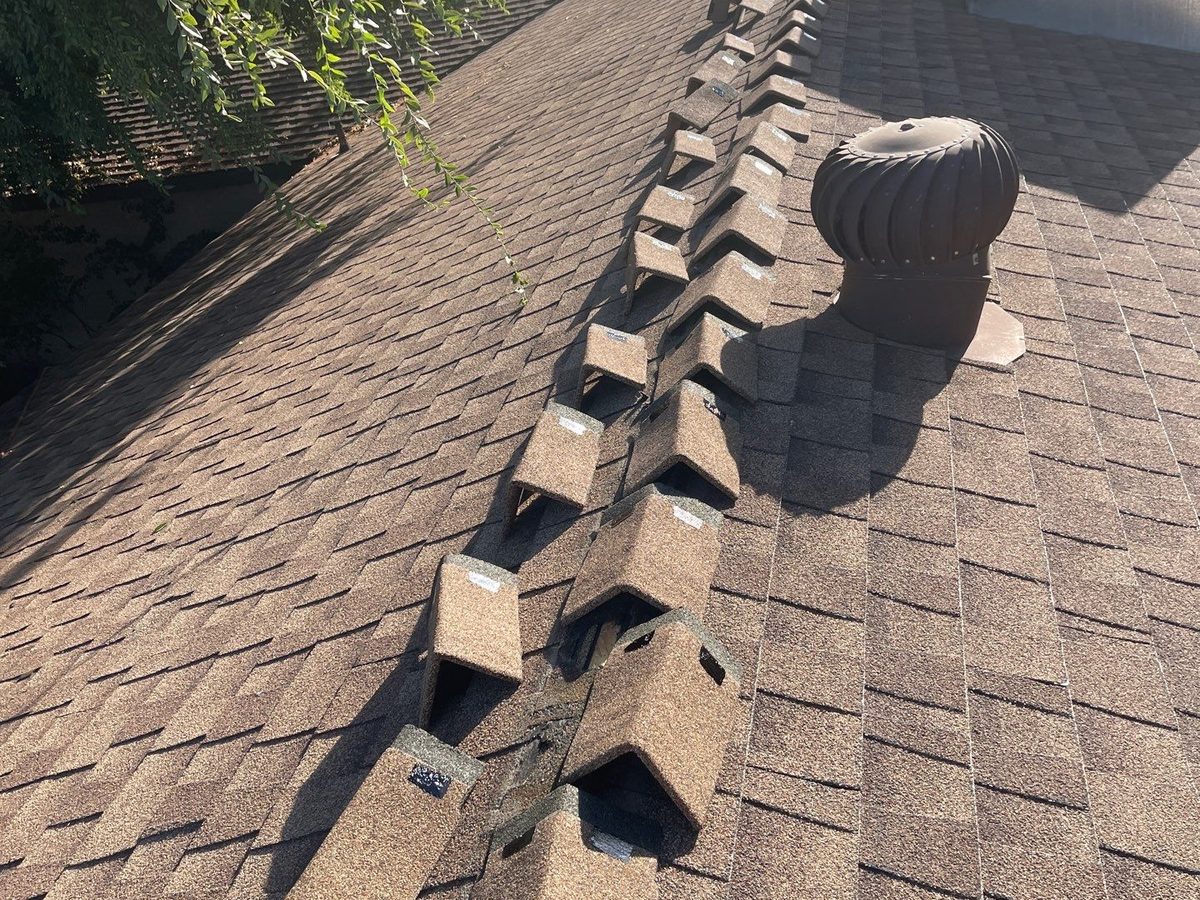
Here is a real example. A homeowner in Clovis had us out on September 30. Her asphalt shingle roof was not leaking, but she had been told it was getting old and wanted to know her options.
From the roof, our inspector found three things:
- Ridge caps split along the fold. On the hips and ridge, the caps had cracked down the middle and one piece had broken out completely. Ridge caps are bent over the peak and take the most sun and wind, so they are usually the first thing to fail when shingles dry out.
- Heavy leaf debris piled on one slope under a tree that hangs over the house.
- The field shingles were still sound. They were dry and faded, but lying flat and holding their granules well enough to be worth saving.
That third finding mattered. A roof with failing ridge caps and healthy field shingles is not a roof that needs to come off. It is a roof that needs its weakest parts replaced and the rest kept flexible.
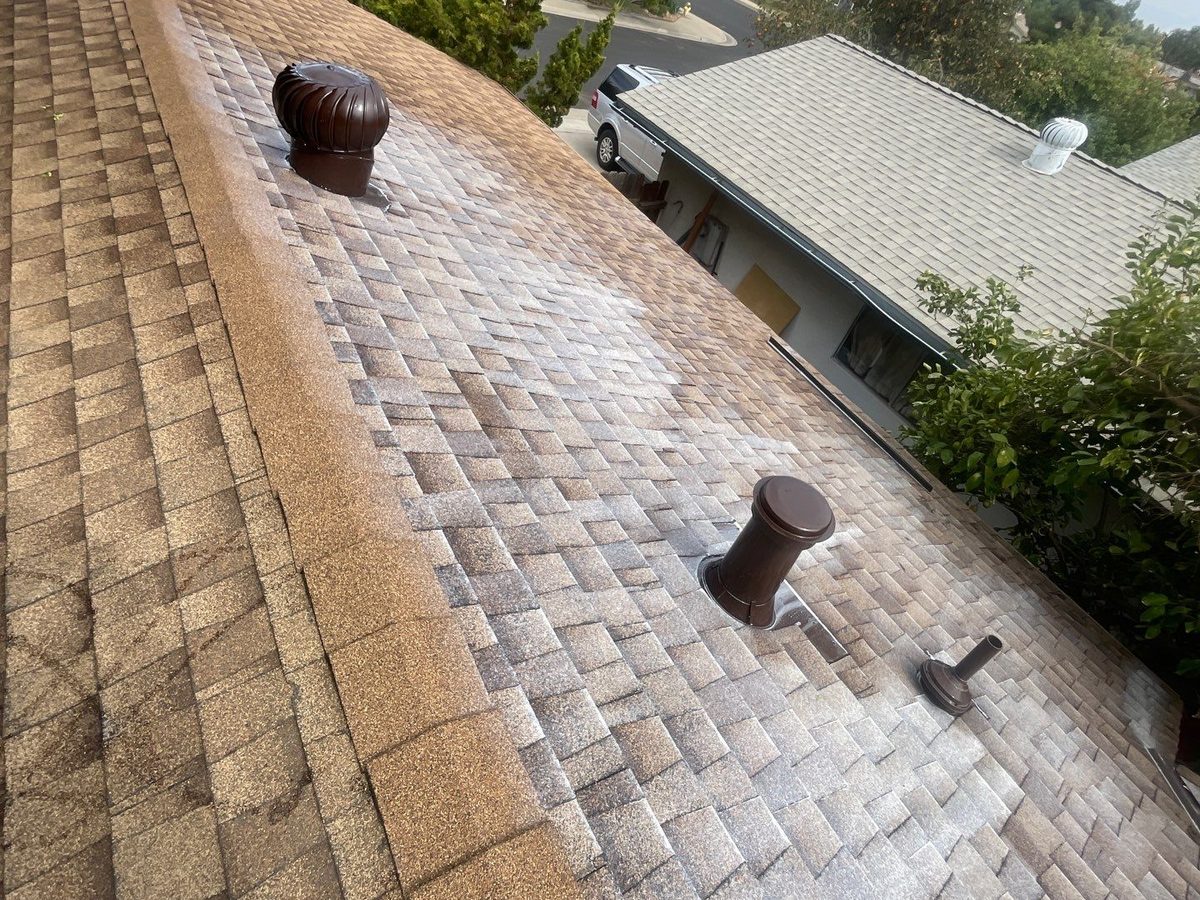
On October 2 our crew replaced all of the ridge caps, about 140 linear feet, and applied a Roof Maxx treatment to the shingles. They also sealed the flashing around a vent pipe. The whole job took one day, with no tear-off and no dumpster in the driveway.
Can You Make an Asphalt Roof Last Longer?
Yes, if you start before the shingles are past saving. These are the steps that make the most difference:
- Keep it clean. Clear leaves from valleys and gutters before the rains. Trim branches back from the roof.
- Fix the small stuff early. Ridge caps, vent boots, lifted shingles and popped nails are small repairs while they are dry. The same items become ceiling and insulation repairs once water gets in. Our roof repair crews handle these in a single visit.
- Get the attic breathing. Balanced intake and exhaust ventilation lowers attic heat and takes stress off the shingles from below.
- Restore flexibility to dried-out shingles. A Roof Maxx treatment is a plant-based oil that soaks into aging asphalt shingles and helps them bend instead of crack. It is not for every roof. It only works on asphalt shingles that still have enough granules and are not curled, broken or soft. That is why we inspect first and only treat roofs that qualify.
Timing matters this year. NOAA's Climate Prediction Center gives a greater than 90% chance of a very strong El Niño this fall and winter, which raises the odds of a wet season in California. Treatments, sealants and shingle repairs all need a dry roof, so the weeks before the first storm are the easiest time to get them done. Our El Niño roof preparation page lists what we check.
If you live in the foothills, roof life is not the only thing to think about. A Class A fire-rated roof and ember-resistant vents also count toward wildfire protection; see our wildfire home hardening guide.
When Is It Time to Replace Instead of Repair?
Some roofs are past the point where repairs or treatments make sense. Replacement is usually the honest answer when:
- Shingles are curling, cupping or cracking across large areas, not just at the ridge.
- You see bare spots where the granules are gone and the black mat shows through.
- The deck feels soft or spongy, or you can see sagging between rafters.
- Leaks keep coming back in different spots after repairs.
- A tile roof's underlayment has failed across most of the roof, not just in one valley.
There is also a code question many homeowners do not know about. Under the California Residential Code, a new layer of roofing cannot go over a roof that already has two or more layers, or over a roof that is water-soaked or too deteriorated to be a solid base. On many older Valley homes, the next roof has to be a full tear-off down to the deck. That is worth knowing before you plan your budget.
If you are not sure which side of the line your roof is on, our guide on the signs you need a new roof walks through what to check from the ground and the ceiling. Or book a free inspection and we will show you photos of what we find, so you can see the condition of your roof for yourself. For full replacements, see our re-roofing page.
Find out how many years your roof has left
Free inspection with photos of what we find. We tell you what needs attention now, what can wait and whether your shingles qualify for Roof Maxx.
Book a free inspectionor call (559) 550-6398
Frequently asked questions
How long does a shingle roof last in Fresno?
Most asphalt shingle roofs in Fresno last about 15 to 25 years. Three-tab shingles tend to land near the low end and architectural shingles near the high end. Valley heat and UV dry shingles out faster than in milder climates, so ventilation, upkeep and catching small problems early make a real difference.
How long does a tile roof last in the Central Valley?
Concrete and clay tile can last 50 years or more, but the underlayment beneath the tile usually wears out much sooner, often around 20 to 30 years. When the underlayment fails, the tiles are lifted, the underlayment is replaced and the same tiles are usually reinstalled.
What part of a shingle roof fails first?
On many Valley roofs it is the ridge caps. They are bent over the peak and take the most sun and wind, so they crack along the fold before the field shingles do. Vent boots and old patch repairs are the next most common failure points.
Can Roof Maxx make my roof last longer?
It can help on the right roof. Roof Maxx is a plant-based treatment that restores flexibility to dried-out asphalt shingles so they are less likely to crack. It only works on asphalt shingles that still have enough granules and are not broken or curled, so we inspect first and only treat roofs that qualify.
How do I know how old my roof is?
Check your home inspection report, permit records with your city or county, or paperwork from the previous owner. If none of those exist, a roofer can estimate age from the shingle type, granule wear and how the materials have weathered. Condition matters more than age, so an inspection tells you more than the date.
Roof life ranges in this article are typical figures from our inspections and vary by material, installation, ventilation and maintenance. They are not a warranty for any specific roof. Roof Maxx eligibility is determined by inspection.