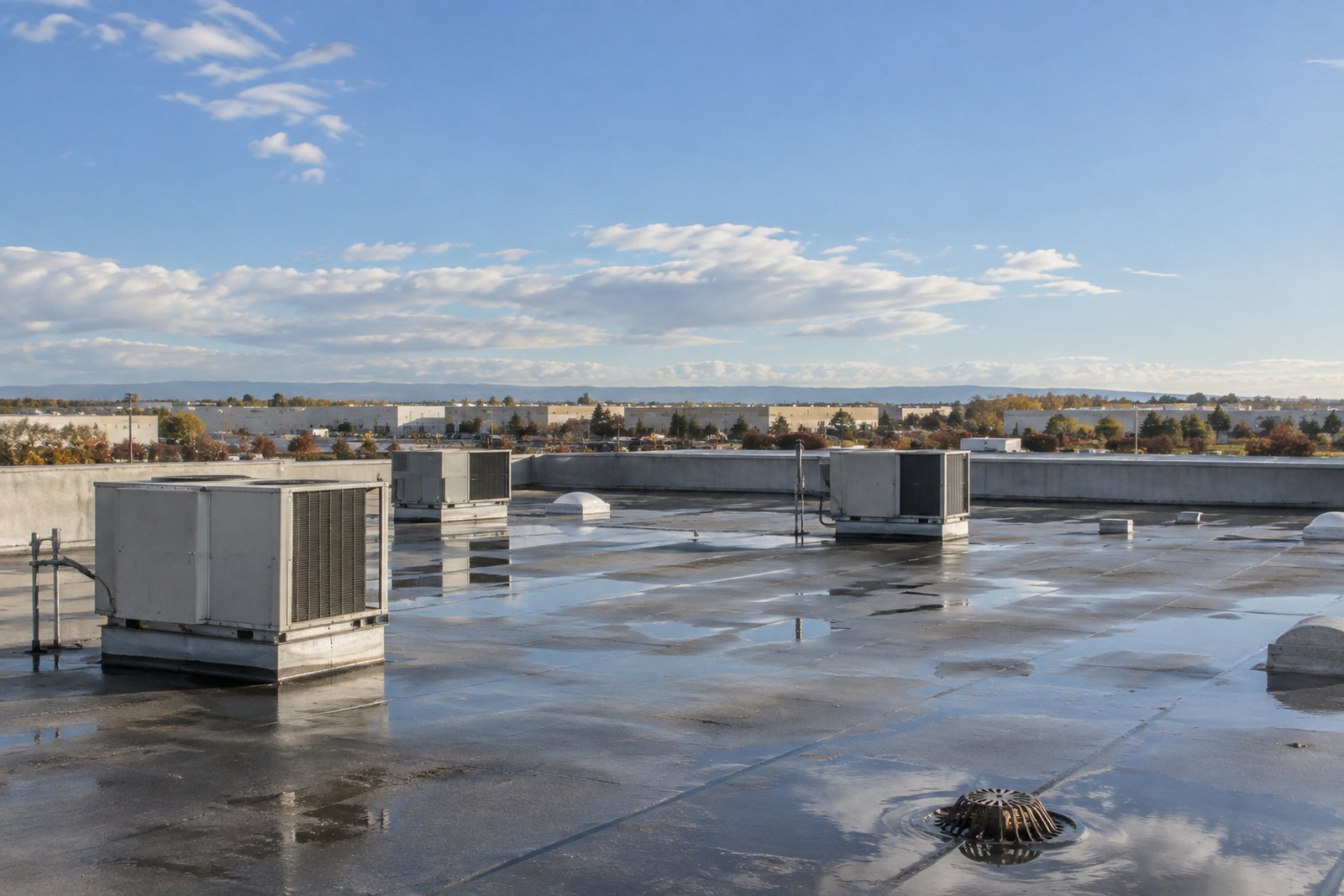
California's rainy season is shaping up to be a big one. NOAA's Climate Prediction Center said in its October 8, 2026 ENSO Diagnostic Discussion that a strong-to-very-strong El Niño is likely through January-March 2027, with greater than an 83% chance. For flat commercial roofs, that forecast puts a spotlight on the smallest details: the seams around vents, pipes, and rooftop equipment where water first finds a way in.
A flat roof vent seam doesn't fail all at once. It starts as a hairline crack in old sealant or a stretched rubber boot, and it widens every time the roof heats and cools. By the time a tenant sees a ceiling stain, the flashing repair needed is usually bigger than it would have been if the seam had been caught during a fall inspection.
What Causes a Flat Roof Vent Seam to Crack?
Flat roof vent seams crack mainly from UV exposure drying out the sealant and rubber boot material, combined with the roof's constant expansion and contraction as temperatures swing. Add ponding water at a low spot near a penetration, and the breakdown speeds up.
Every pipe, vent stack, and piece of rooftop equipment is a penetration through the membrane, and each one depends on a flashing assembly to stay watertight. California's building code is direct about this: the California Building Code, Chapter 15 requires flashing "installed in such a manner so as to prevent water from entering the wall and roof through joints in copings, through moisture-permeable materials and at intersections with parapet walls and other penetrations through the roof plane." That's the standard a seam is supposed to meet, and it's also exactly where failures start once sealant ages past its working life.
On a gravel-ballasted built-up roof, the gravel itself can hide early cracking, since the seam sits below the surface stone at parapet lines and equipment curbs. A rooftop HVAC curb, a drain strainer, or a vent pipe base all rely on the same basic promise: a continuous, flexible seal between two different materials that move at different rates. Once that seal dries out or tears, water doesn't need a big gap. A hairline opening is enough during a sustained storm.
How Do You Know a Flashing Seam Is About to Fail?
The clearest signs are dried, cracked, or lifting sealant at a penetration, granule loss or staining in the membrane right around a vent or curb, and any visible gap where a boot no longer hugs its pipe. None of these need a leak to already be happening — they're the warning signs that come before one.
During a pre-rain roof check, a crew walks every penetration on the roof, not just the obvious ones. A pipe boot flashing at a plumbing vent, the corner seals on an HVAC curb, and the seam where a parapet wall meets the field membrane all get checked the same way: pressing and inspecting the sealant for flex versus brittleness, and looking for daylight or water staining underneath. Tar streaking along a seam is often a sign of a previous patch that's starting to fail again, not a finished repair.
What Did Our Crew Find on a Recent Flat Roof Inspection?
On a flat commercial roof our crew inspected in Bakersfield, California, in October 2026, the walk-through turned up exactly the pattern described above. The roof is a gravel-ballasted flat roof with multiple penetrations: HVAC curbs, roof drains, and vent pipes spread across the field.
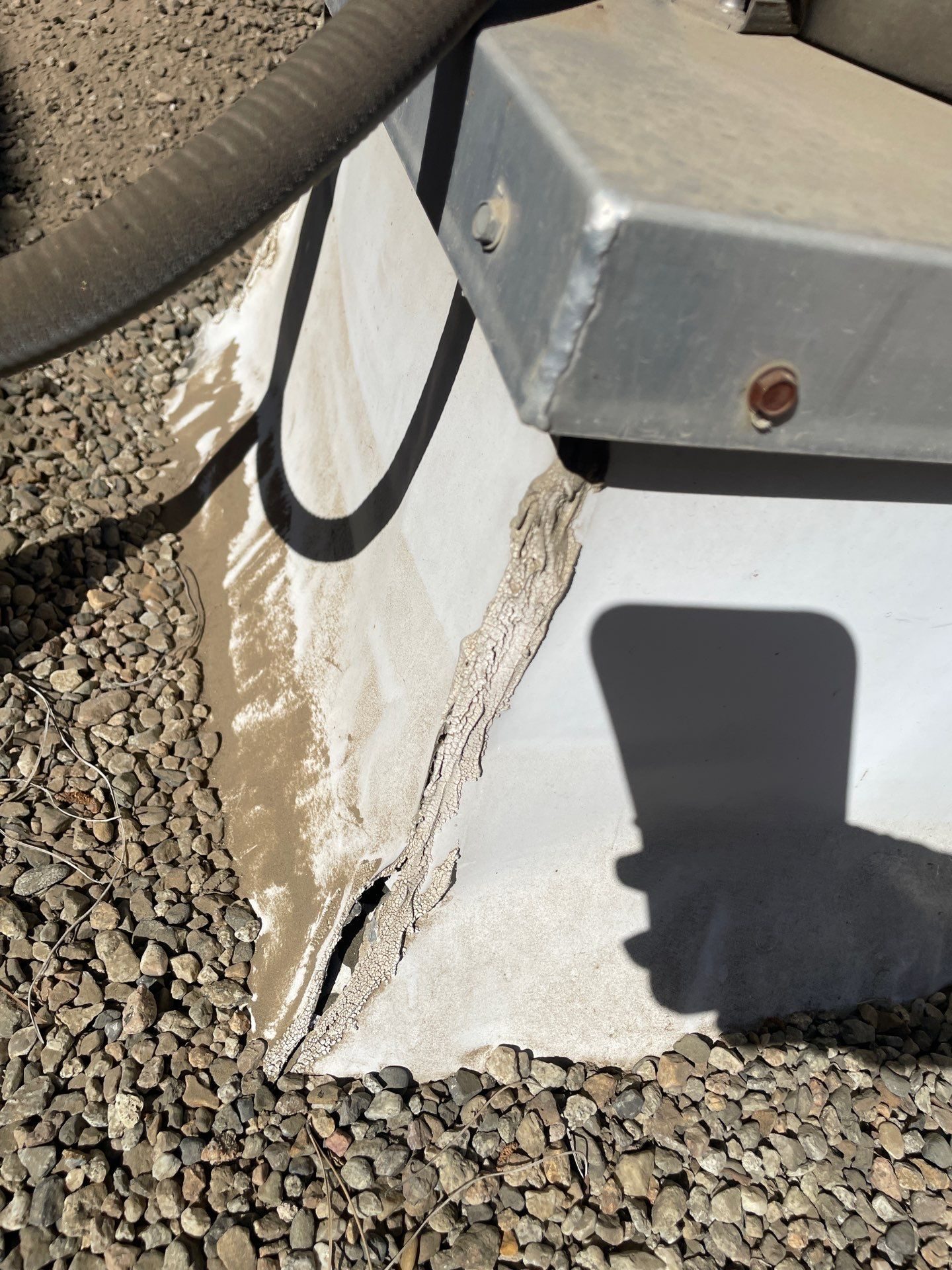
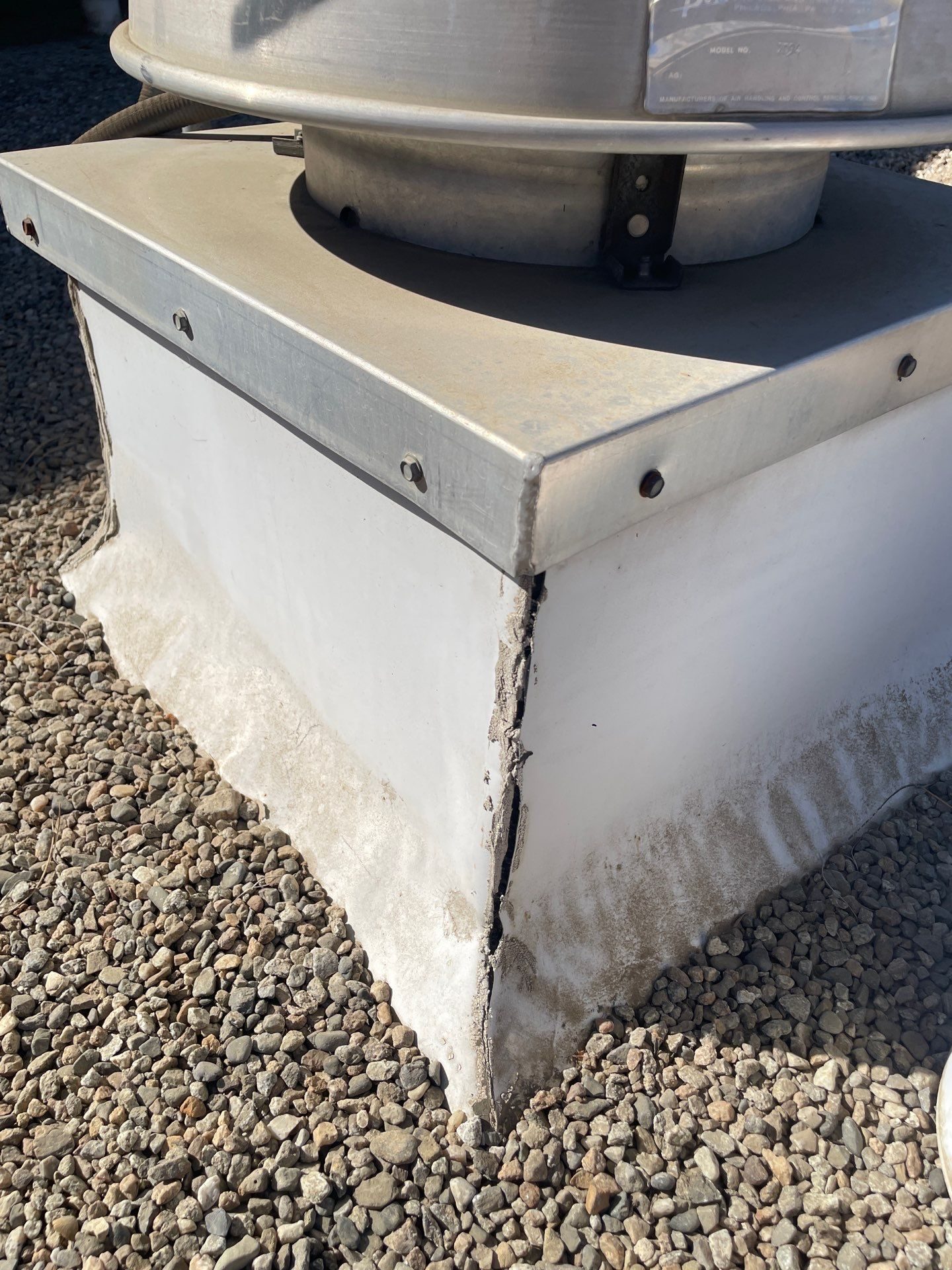
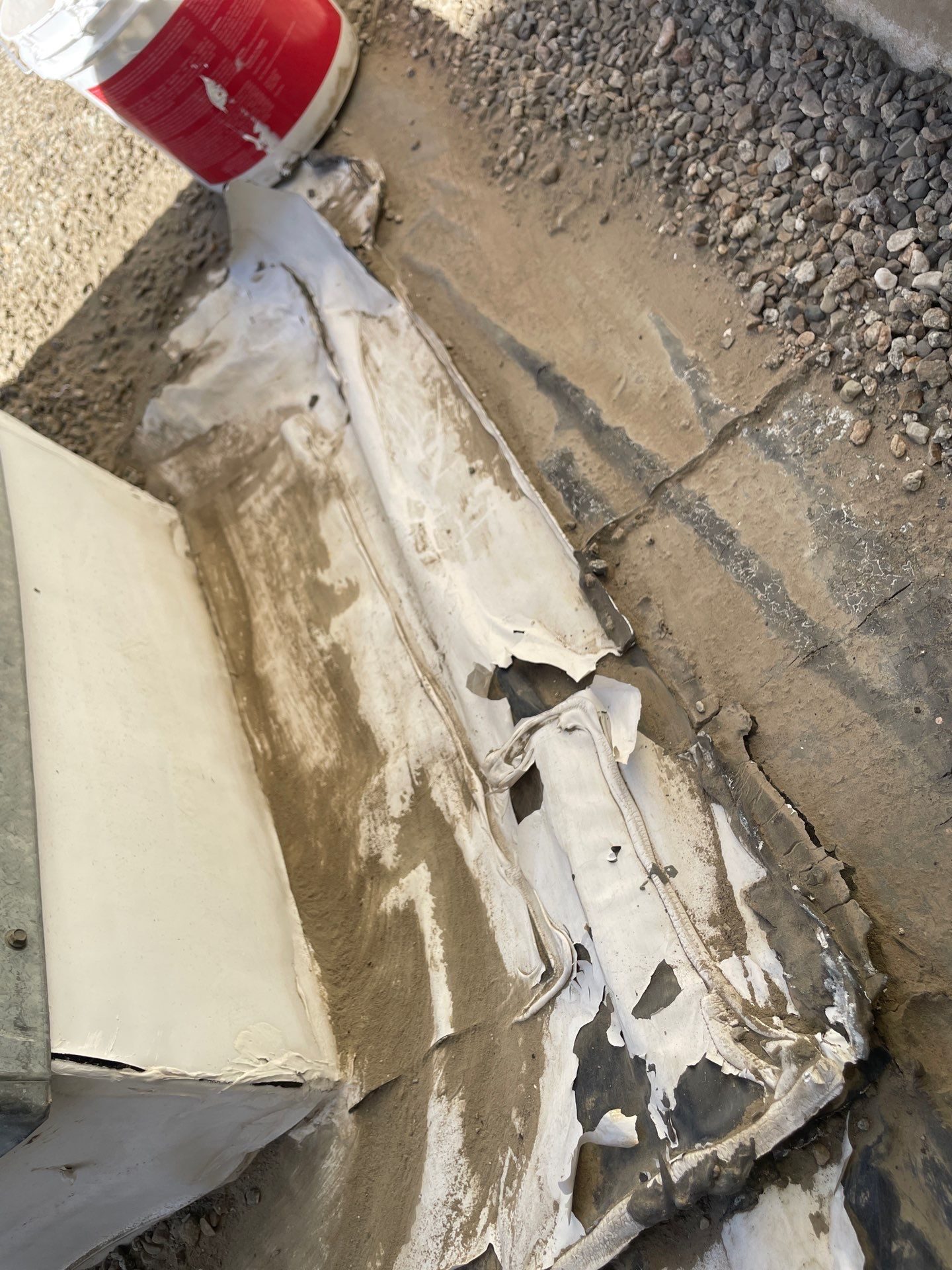
At one rooftop exhaust fan curb, the metal corner had cracked and torn away from the base, leaving a visible gap in the seam where water could track in. Nearby, a section of membrane had come loose at a corner and showed torn, delaminated layers consistent with age and UV exposure rather than a single storm event. Those two findings line up with what the roof's overall seam condition suggested: flashing that had been drying out and losing its seal for a while, not a sudden failure.
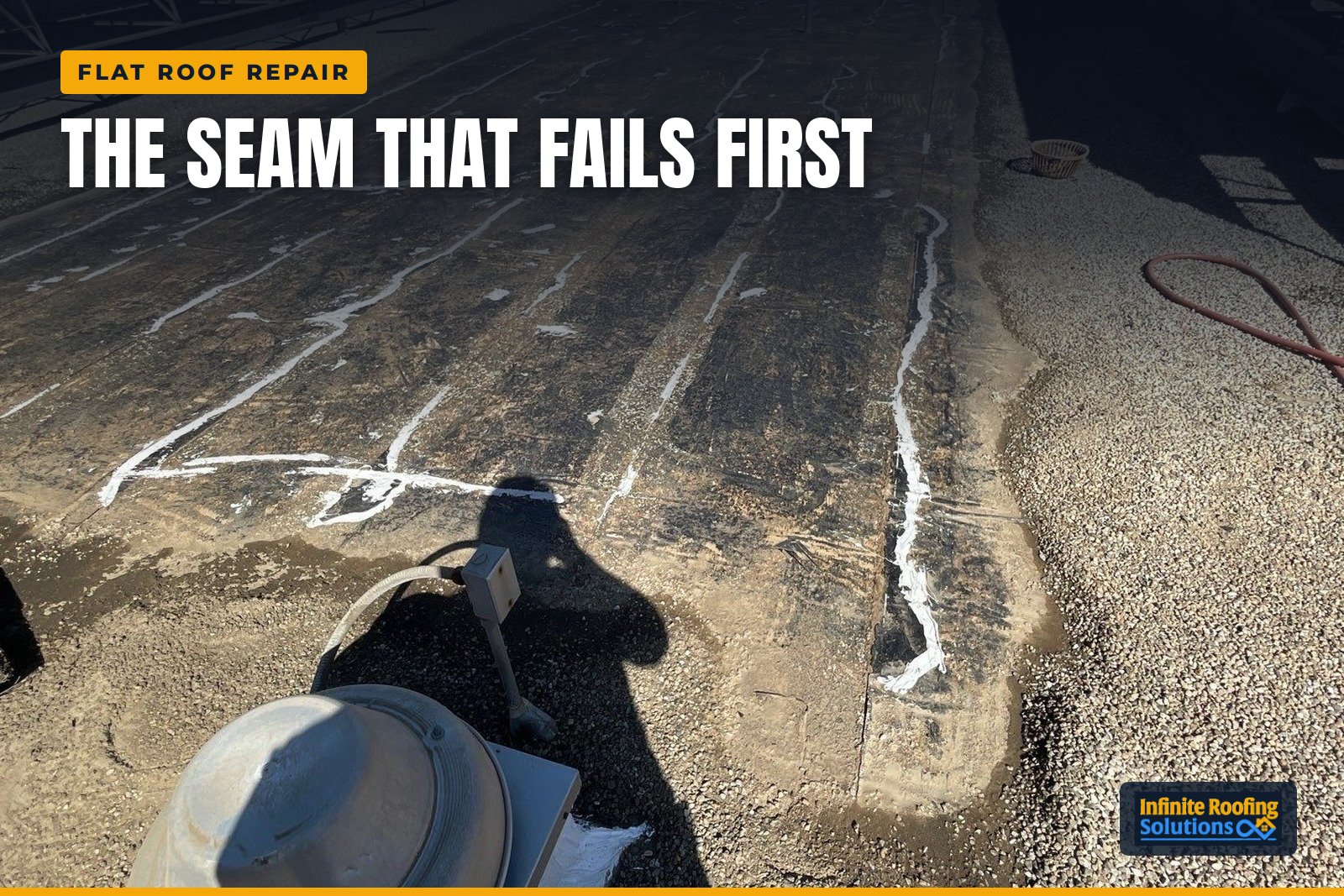
Elsewhere on the roof, the crew applied sealant beads along membrane seams as part of the resealing work, going bead by bead across the field rather than only at the one damaged curb, since a seam that looks fine today can be the next one to crack. Photographed stages included the torn membrane corner, the cracked fan curb seam, and sealant being applied in rows along the seams on the gravel ballast. The job folder reflects what our crew documented in progress; it does not include a final after-photo of the fan curb repair specifically, so we're describing only the steps that were photographed, not a finished result at that one spot.
What Does a Proper Vent Seam Repair Involve?
A proper repair starts with removing the old, failed sealant completely rather than caulking over it, then inspecting the flange, boot, or metal counterflashing underneath for damage that sealant alone won't fix. If the membrane itself is torn or a curb's metal corner has cracked, that material gets replaced or reinforced before any new sealant goes down.
Compatibility matters here. The replacement sealant or boot has to match the existing roofing system, whether that's a built-up gravel roof, a single-ply membrane, or a modified bitumen system, since mismatched materials can react poorly or fail to bond. Flashing repair on a ballasted roof also means pulling back gravel around the work area so the seam is fully visible and accessible, not just patched around loose stone.
Once the new material is in place, the seam needs time to cure according to the product's specifications before it's exposed to standing water or foot traffic. Crews document each penetration they service with photos, both for the property owner's records and so any recurring issue at the same spot can be tracked over future inspections. That documentation is also what separates a real repair from a quick cosmetic fix: a photographed, inspected seam gives everyone a clear record of what was actually found and addressed, not just a claim that it was handled.
Why Does Timing Matter Before the Rainy Season Hits?
Timing matters because a cracked seam that's a dry-weather inconvenience becomes an active leak path the moment sustained rain arrives, and repairs are harder to schedule and complete once storms are already rolling through. With this year's El Niño pattern expected to bring a wetter stretch to California, property managers who get ahead of flashing issues avoid emergency calls during the worst of it.
Flat commercial roofs are particularly exposed because they have more penetrations per square foot than a typical pitched residential roof — HVAC units, drains, vent stacks, and often multiple pieces of rooftop equipment all installed after the original roof went down. Each one is a separate seam that ages at its own rate, which is why a full-roof walk rather than a single spot-check is the only way to know where the next failure is likely to show up. A broader pre-rain roof maintenance checklist covers gutters, attic ventilation, and drains alongside flashing, since all of these systems interact during a storm.
A pre-rain inspection also creates a documented baseline. If a seam is sound today, that's on record; if it's marginal, it gets addressed now instead of during a storm when access is harder and the leak is already active. We document the damage with photos and a written report so you can file if an issue does turn into an insurance matter down the line, but the goal of a fall inspection is to prevent that call from ever being necessary.
Property managers overseeing multiple buildings, or a single commercial roof with a mix of older and newer rooftop equipment, benefit most from this kind of walk-through because flashing age doesn't follow the roof's overall age. A vent boot installed five years ago during an HVAC swap can be failing while the surrounding membrane still has years of life left, and the only way to catch that mismatch is to check every penetration individually rather than assuming the whole roof is in the same condition.
Infinite Roofing Solutions is a licensed California contractor, CSLB #1126804, and a 5-Star Certified Roof Maxx dealer serving the Central Valley from Bakersfield to Sacramento. A free roof inspection before the rain gets every seam on a flat commercial roof checked and documented, so cracked flashing gets fixed on a schedule instead of during a leak.
Book your free roof inspection before the rain
We walk the roof, photograph every problem we find, and give you a written recommendation, with no obligation.
Book a free inspectionor call (559) 550-6398
Frequently asked questions
How do I know if a flat roof vent seam is failing?
Look for cracked or lifted sealant around pipe boots, vents, and curb bases, plus dried, hardened caulk that no longer flexes. Discoloration or granule loss near a penetration can also signal water has already been tracking in. A roofer can confirm with a close inspection of every seam before the rain starts.
Can a cracked vent seam be repaired, or does the whole roof need replacing?
Most cracked seams are a localized repair: removing old, failed sealant and reapplying a proper flashing seal or boot around the penetration. Full roof replacement is only needed if the membrane itself is widely deteriorated. An inspection tells you which situation you're in before any work starts.
How often should flat roof seams be checked before winter?
An annual pre-rain inspection is standard for flat commercial roofs, since UV exposure and thermal movement wear down sealant every season. Buildings with rooftop HVAC units or multiple penetrations benefit from checking seams more often, since each one is a separate potential leak point.
What causes a flashing seam to crack in the first place?
Sun exposure dries out and shrinks sealant and rubber boots over time, while daily heating and cooling cycles flex the roof and pull seams apart. Ponding water can also accelerate wear at low spots. Once a seam opens even slightly, wind-driven rain finds its way in.
Is sealant alone enough to fix a leaking vent seam?
Sealant can bridge a small gap, but if the boot or membrane underneath is torn or brittle, a proper flashing repair means replacing that material, not just caulking over it. Covering a deeper defect with sealant often lets the same leak return within a season.
Job details describe a flat commercial roof our crew inspected and repaired in Bakersfield, California, on October 14, 2026. Every roof is different; recommendations depend on inspection.